
Basalt pipes production
Description of the opportunity
Pipes made from fiber reinforced polymers (FRP) are replacing alternative pipe materials across major industrial sectors, including oil and gas, due to superior physical properties (lighter, stronger, corrosion resistant). In the long run they have the potential to replace a large proportion of the global industrial pipe infrastructure. The vast majority of these FRP pipes utilise glass fibers (GFRP) which are applied to pipes using a well-established filament winding process. Although these GFRP pipes have been around for over a decade they are still regarded as being at the forefront of pipe construction. Therefore, pipes based upon basalt fibers (BFRP pipes) are extremely new and uncommon.
The GCC is regarded as one of the largest and fastest growing markets for GFRP pipes. Future Pipes Industries claim there has been a transition from 8% to 23% of pipes being made from GFRP in 10 years. The use of basalt as an alternative to glass fiber materials has been investigated for over a decade. There is some evidence that basalt fiber is now making its way into commercial products based on the promise of improved physical properties.
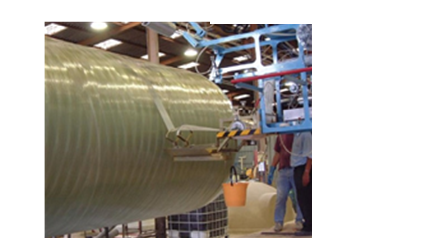
Figure 40: Filament winding of large diameter industrial pipe
Examples of Commercial Basalt FRP Pipes
Polyplastic Group, (Russia) introduced basalt fiber reinforced polypropylene pipes in 2018. The company claims basalt plastic pipes can compete both with metal pipes and other polymer pipes, allowing them to lay pipelines in corrosive environments and also high temperature and high pressure environments.
Wavin Ekoplastik (Czech Republic) has developed a polypropylene (PP) pipe (Figure 41)with a basalt fiber-reinforced layer which they claim exhibits as much as a 50% improvement in pressure resistance at high temperatures and 20% improvement in flow rate compared to the baseline GFRP pipe. In addition to these examples there is some evidence for the development of hybridized composite pipes combining glass and basalt fibers.
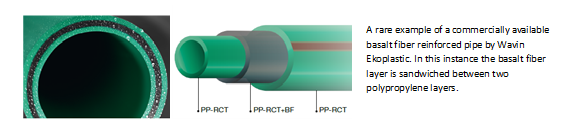
Figure 41: Example of a commercially available basalt fiber reinforced pipe by Wavin Ekoplastic
Claimed advantages of basalt FRP pipes
- High and/or wider-ranging service temperatures
- Improved impact resistance
- Improved pressure resistance
- Enhanced plant performance based upon improved pipe specification
This differentiates basalt fiber significantly from glass and carbon.
Market of the opportunity
Overall market is substantial
According to reports by MarketWatch, the Global Fiber Reinforced Plastic Pipe market was valued US$ 2.1 Bn in 2017 and is expected to reach US$ 3.52 Bn by 2026. The dominant sector is oil and gas.
The global leader in Glass FRP pipe (GFRP), Future Pipe Industries, Dubai, claims that the GCC represents the fastest growing market for G FRP pipes. However, data for the current market for BFRP pipes is scarce. Whilst there is evidence for use of BFRP pipes and pressure vessels, this appears to be a recent development, suggesting they are currently only a very small portion of the market.
BFRP pipes are do not appear to be making significant inroads to the market yet
Searches for GFRP pipes reveals many commercial products and suppliers. However, searches for basalt FRP pipes almost exclusively reveals scientific literature. This is further evidence that the use of basalt fiber in these applications is currently a niche within this market.
These observations raise the question as to why BRFP pipes have not gained more of a foothold in the market. Understanding this will help provide a clearer picture for the future growth potential of this market.
Based on research some barriers slowing further adoption of BFRP pipes may include:
- The historic lack of consistent quality continuous basalt fibers supply means companies have not been prepared to commercialize products utilizing this material
- Products require high levels of confidence that materials will perform over the long term, so transition to new materials like basalt (which have limited proven service life) makes them high risk
- Current solutions based on glass fiber address the needs of the market sufficiently well so the imperative to transition to an alternative material is not sufficiently high
- The range of applications for which basalt offers substantial advantage over glass fiber is limited
- The marginally higher cost of basalt fibers makes BFRP pipes uncompetitive in some applications
- Current manufacturers have spent limited resources on long term R&D, focusing instead on process improvement, so have limited awareness of the potential for BRFP
Establishing which of these barriers is of greater significance will be an important in establishing longer term potential growth of this market.
Note: It is important to highlight that cast basalt lined pipes are more commercially widespread. These are typically applied to the lining of pipes to deliver improved wear resistant (rather than structural improvements derived from basalt fibers). This employs a casting process and does not utilises basalt in fiber form. Whilst this may represent a valid area for investigation it is out of the scope of this assessment.
Key technical trends
There is a significant and growing body of scientific literature investigating the use of basalt fiber for application in FRP pipes. Some of the key messages from this literature includes:
- Basalt fiber delivers preferable physical properties to glass fiber in some circumstances
- Being a naturally occurring and environmentally friendly material is an advantage
- There are multiple studies looking at use of basalt fiber in hybrid composite systems
As the body of evidence continues to grow it becomes clearer, it will stimulate commercial development of products which leverage some of these proven technical advantages.
Typical production facilities
The core technology required to make B-FRP pipes is filament winding equipment. This varies in scale depending upon the pipe or tube length and diameter. However, the basic principle is illustrated below (Image from Basalt Fiber Tech).
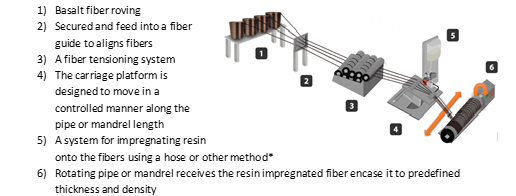
*Fiber may be pre-impregnated (towpreg), pulled through a resin bath before being applied to the mandrel (wet winding) or wound dry and then infused with resin in a secondary process. High-end winders produce tight-tolerance parts with superior mechanical properties
It is common for these systems to incorporate automated control systems ensuring control and consistency of filament winding parameters. Filament winding technology is available in a range of different sizes depending upon end applications. It is also available for use at desktop scale for R&D purposes.
Business Canvas
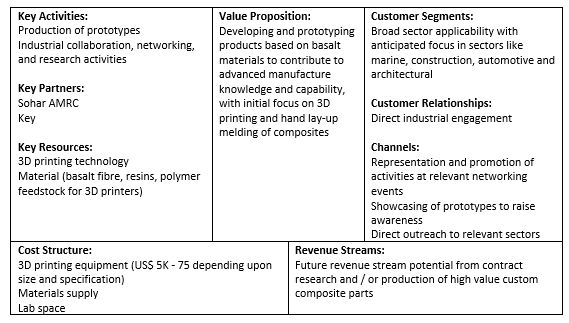
Table 15
Further Information
This page provides an introduction and overview of the nature of the selected opportunity. For more detailed information or to get involved with this opportunity, please contact Talal Al Wahaibi at the IIC: Talal.AlWahaibi@iic.om