
Click on the relevant box below to jump to that opportunity.
Chromium in Oman
We used desk-based research and primary interviews with key stakeholders to determine current activity within the Omani chromium industry. Figure 24‑1 shows the chromium value chain with the coloured items signifying areas that are active in Oman.
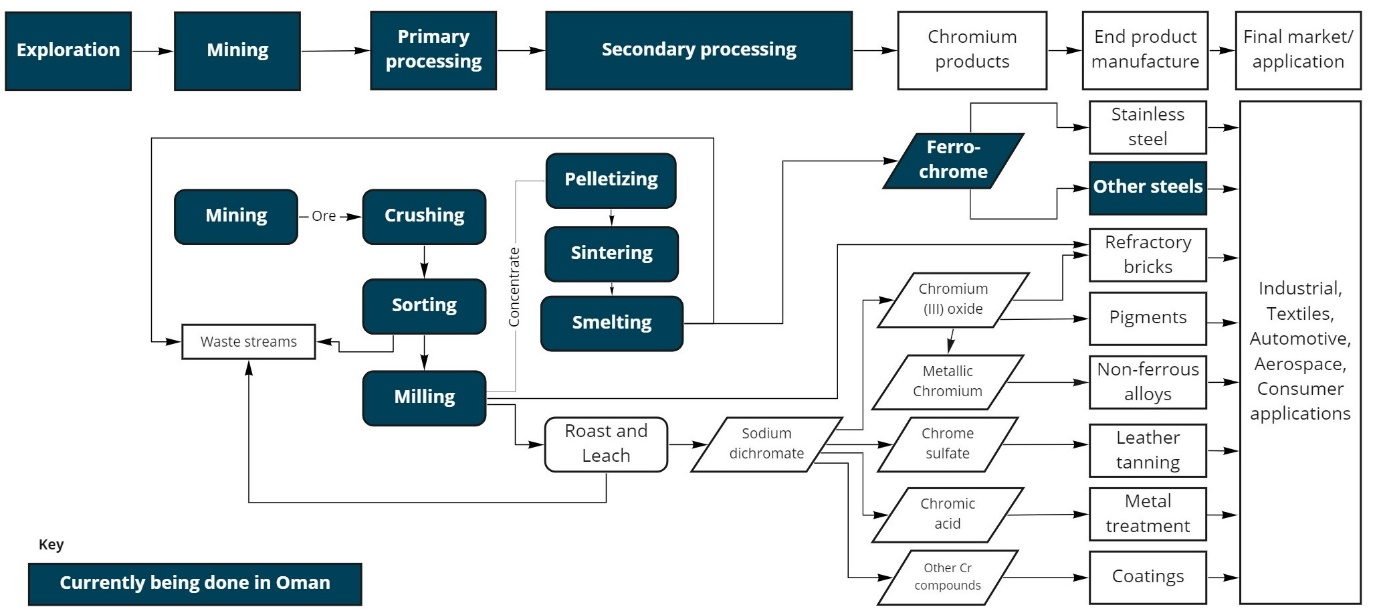
Figure ‑1.Chromium value chain active in Oman.
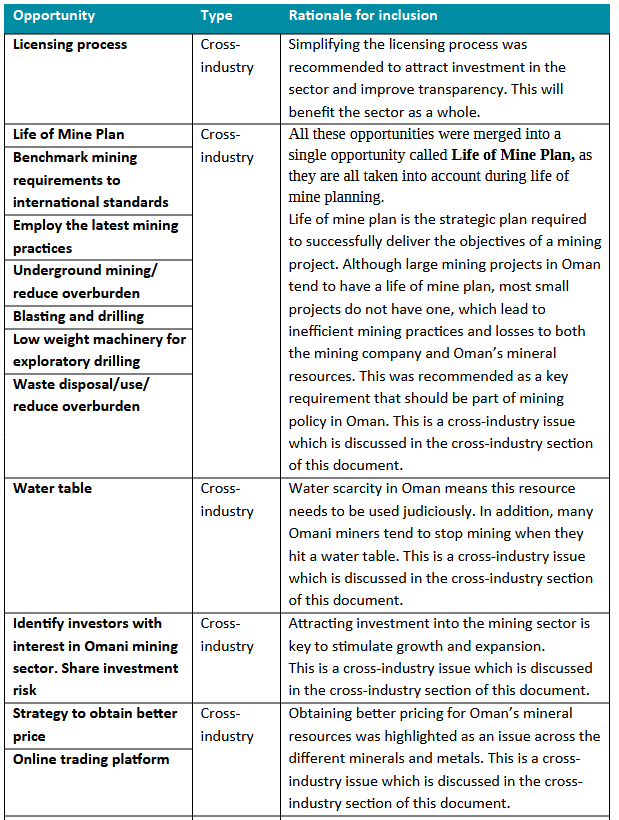
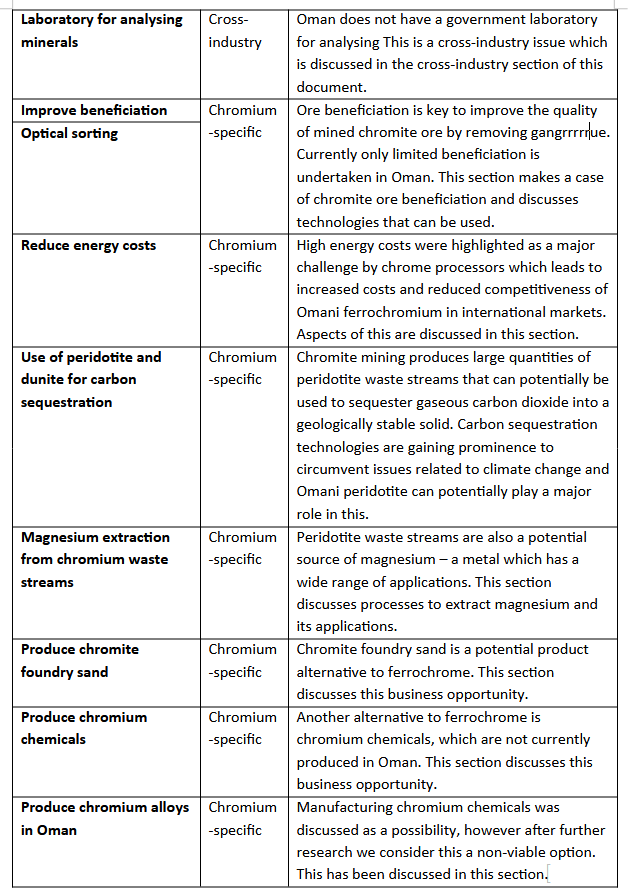
Results from our research were presented in a workshop with industry stakeholders. Following discussions at the workshop and with the IIA the opportunity areas below were selected for further research and are presented either in the sections below or in the section under ‘cross-industry opportunities’.
Table ‑1. Opportunities selected for further research.
Chromite ore beneficiation
Background on ore beneficiation
Beneficiation is the process where ore is reduced in size and gangue (unwanted material) is separated from the ore. This improves the economic value of the ore by producing a higher value product (ore concentrate) and a waste stream (tailings). Ore from different origins will lead to ore concentrates with variable chromite concentrations. In order to overcome this and produce consistent product for the market, beneficiation can be combined with ore blending from different sites to lead to a large volume of consistent product.
Rationale for ore beneficiation in Oman
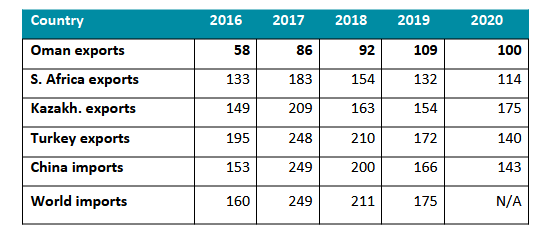
Currently there is very limited activity in chromite ore beneficiation in Oman. Some Omani companies crush the mined ore to separate gangue and resize the ore. Ore may be sorted by hand, which is highly inefficient. Furthermore, most Omani companies tend to sell raw ore, which is of low quality and inconsistent yield. This leads to low prices for Omani miners compared to ore from other countries, in international markets (Table 25‑1). During primary research interviews and the workshop, stakeholders connected to local companies that purchase Omani ore said that often they have to import higher quality chromite ore as the ore available within the country can sometimes not meet their processing requirements. This makes a strong case for miners within Oman to beneficiate and blend their ores to not only satisfy quality requirements of local ferrochrome processors, but to be able to command a higher price in international markets.
Table-2. Prices in USD/ t for chromite ores and concentrates (source: Worldtrademap). Omani ore achieves relatively low prices in world markets.
Technologies for ore beneficiation
There are a different a large variety of technologies available for ore beneficiation. Typically, they are used in combinations and various sources suggest the need for analysis in order to get the most benefit from a process (flowsheet). Beneficiation includes communition and subsequent concentration by sorting.
Technologies for ore concentration
Gravity separation: Gravity separation methods sort ore particles based on their density. Most chromite ores around the world are beneficiated by gravity concentration techniques.1They typically rely on a fluid drag force and include methods such as:
-
-
Heavy liquid separation: Separation of particles in different densities is facilitated by a prepared separation medium.
-
Spirals: Spirals operate using density differences to concentrate material into respective high grade (ore concentrate) and low grade (waste) products. For spiral applications, the feed material must be less than 1 mm. Spirals can be run either in batch mode or continuously.
-
Shaking tables: Shaking tables utilise both particle density and, to a lesser extent, particle size to fractionate fine ore samples (< 1 mm) into product, middlings and waste fractions. The grade-recovery profile obtained on the shaking table is also used as a benchmark for modelling performance of a spiral circuit.
-
Hydroclones (also called Cyclones): creating a vortex to separate material of different densities.
-
Magnetic and electrostatic: Magnetic/electrostatic separators utilise the differences in magnetic/electric susceptibility to separate valuable minerals from gangue. Different types of separators are used depending on wet/dry applications, particle size and magnetic susceptibility.
Other (X-ray fluorescence or transmission): Other, more recently developed ore beneficiation machinery involve the use of sensors in combination with air jets. For these machines every particle is separately evaluated using x-ray fluorescence or x -ray transmission and air jets are then used to separate the particles.
Case studies
The following case studies were identified for chromite ore beneficiation.
Case study: Beneficiation flowsheet for Turkish ore 1
Background: An existing concentrator processes low-grade chromite deposits. The grade of the ore is approximately 5%.
Method: Detailed characterization, process mineralogy, and liberation studies were performed, as well as laboratory test work. Two different circuit alternatives were compared.
Outcome: A provisional flowsheet (Figure 25‑1) was developed using spirals, teetered bed separator (TBS), and shaking tables. This resulted in a total final concentrate of 49.5% Cr2O3 and 71.51 CrO3 recovery. Plant scale trials for verification led to an increase in 20% in total recovery, with less footprint of the plant, reduced water usage and lower operating cost.
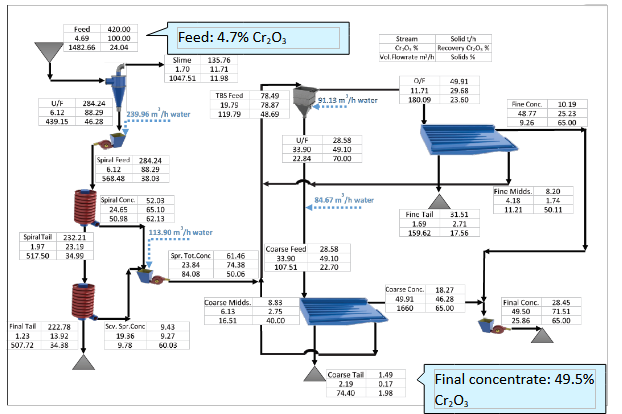
Figure-2. Beneficiation flowsheet developed by İlkay Bengü Can et al for the beneficiation of low-grade chromite ore.
Case study: Process optimisation of a chromite ore gravity concentration plant
Background: Researchers at Tata Steel and French University of Lorraine evaluated the performance of an operating chromite beneficiation plant based on mineralogical characterization of samples from around the circuit.
Method (Figure 25‑2): Mineralogical characterization of samples along the process; input into database, which includes data on all processes and operating parameters. It was found that a
variation in ore characteristics plays a critical role in the evaluation of beneficiation circuits. Characterization studies aided by QEMSCAN (Quantitative Evaluation of Minerals by Scanning Electron Microscopy) helped in the optimisation of the gravity separation process.
Outcome: This method has provided insight into the behaviour of certain species (chromite and silicates) of minerals in the circuit and resulted in the reduction of chrome losses (<12% Cr2O3) as well as achieving a target of 3.27% SiO2 in the concentrate.
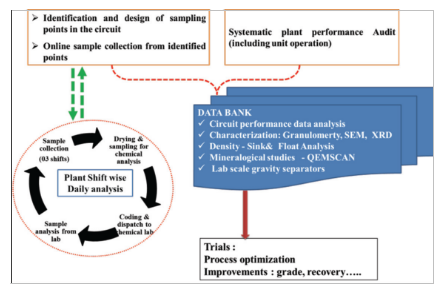
Figure ‑3. Methodology adopted by performance evaluation of beneficiation plant.
Case Study: Chromite recovery using magnetic separation method
Background: A study was undertaken to evaluate the chromite recovery from shaking table tailings of the Forumad plant in Iran using high-intensity magnetic separation. The average feed grade was 7.62% Cr2O3.
Method: In total 27 tests were undertaken in order to determine the optimum conditions for the grade and recovery. Separators by Papko Magnet company in Iran were used (Figure 25‑3).
Outcome: It was found that magnetic separation can be a reliable method to produce a concentrate which can be used as a raw material for gravity separation for run of mine (the raw unprocessed or uncrushed material in its natural state obtained after blasting or digging). In addition, it can also be blended with high grade concentrates to increase recovery.
Figure‑5. Tomra X-ray transmission (XRT) selective ore sorting machine.
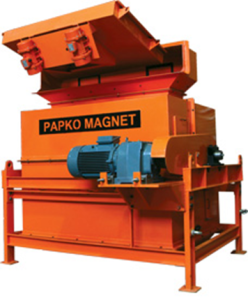
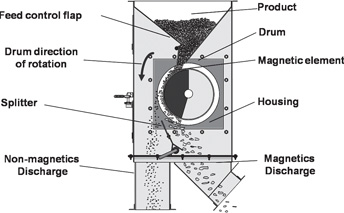
Figure‑4. Magnetic drum separator as an example of magnetic separation equipment (Papko Magnet, Iran).
Equipment companies for efficient ore sorting
Table-3. Summary of equipment suppliers for efficient ore sorting.
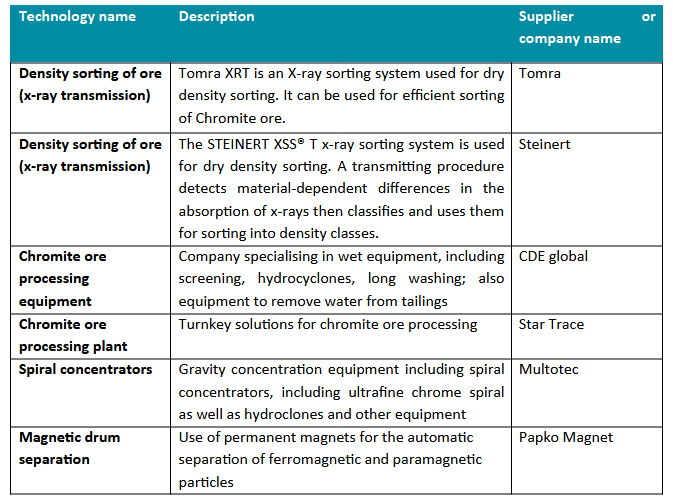
Equipment example: Tomra sensor-based selective sorting machinery
Tomra1 – a Norwegian company – sells an X-ray transmission (XRT) system for automated sorting of ore. The machine recognises specific characteristics of the material of interest such as colour, atomic density, transparency, or conductivity. Target materials are then selectively extracted using high speed, directed air pulses.
The machines can be used in two ways:
-
Optimising ore quality and value at source and reducing amount of host rock inclusions in transported material. This has the added benefit of reducing energy consumed crushing the ore to a smaller size.
-
Allowing tailings to be reprocessed to identify useful material to increase yield to the maximum.
Benefits of the machines include:
-
Automated and efficient sorting
-
No water usage
-
No chemical reagents required
-
Once the sorter and feed system are set up, the plant runs with little input from operators
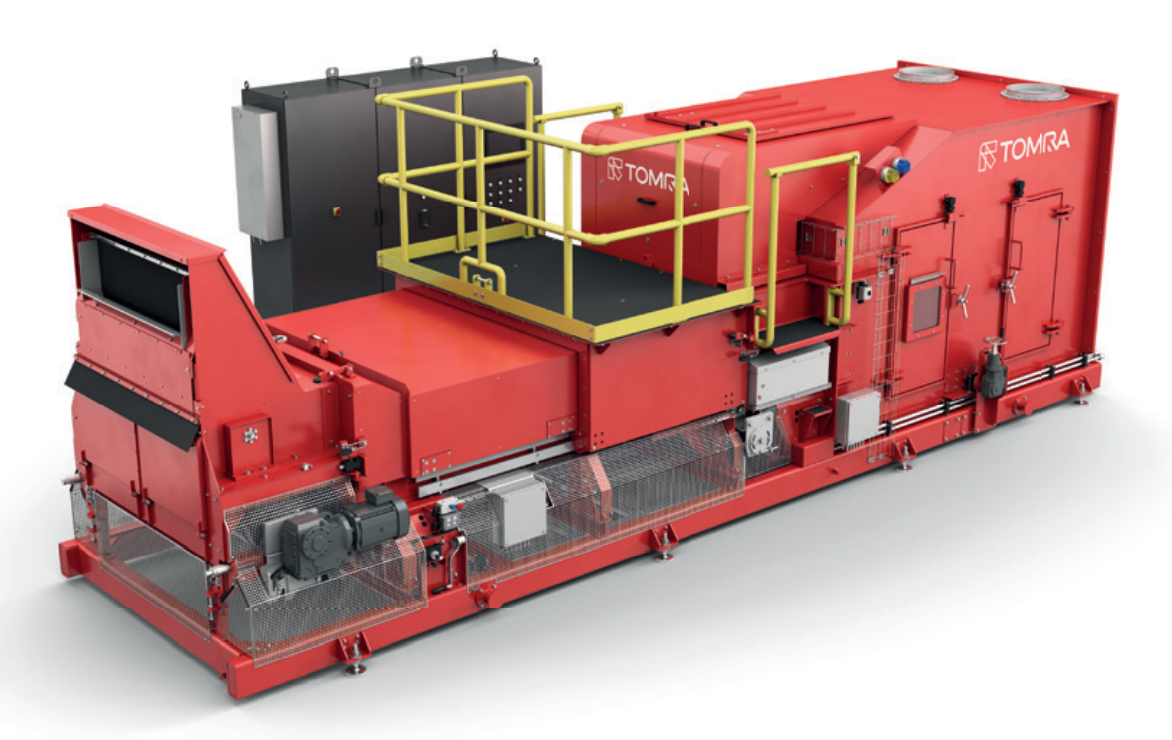
Figure‑5. Tomra X-ray transmission (XRT) selective ore sorting machine.
Case study: TOMRA XRT ore sorting in South Africa – upgrading material of 20-28% Cr2O3 to a minimum grade of 38 %
Background: Easter Chrome Mines were looking for a solution to improve the efficiency of the sorting plant. The existing Dense Media Separation (DMS) plant producing small lumpy product at a minimum of 38% was thought to be very inefficient.
Improvement using TOMRA sorting machine:
-
Higher recovery rate -the TOMRA COM XRT 2.0 sorter has exceeded expectations, with grades being achieved in excess of 40% Cr2O3 and mass recoveries of 25 to 30 % from scalped waste resulting in Chrome-in-tails as low as 8 %.
-
Reduction in cost – no water usage and no use of expensive reagents resulted in cost reduction of approximately 50 % compared to the cost of the DMS plant. There is also lower energy cost compared to DMS.
-
The cost of equipment for methods using alternative technologies has increased (Dense Media Separation) 1.
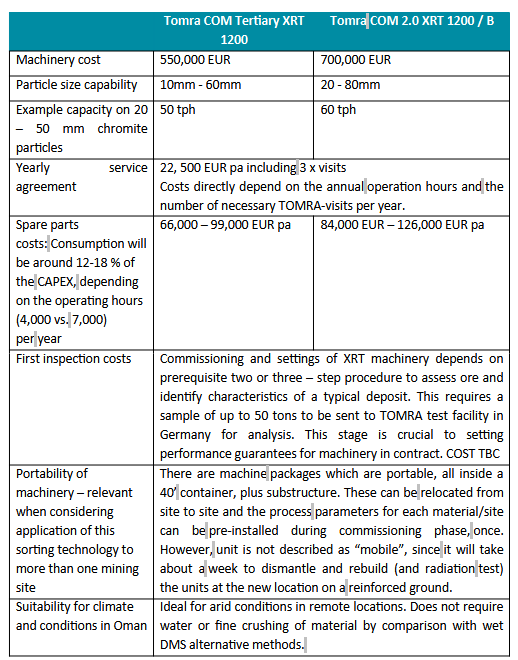
Estimated costs and viability of TOMRA XRT sorting machinery
Table ‑4. Performance and cost details of sorting machinery.
Next steps
In order for Omani ore to achieve higher prices in the market and preserve more of the value chain within the country, ore beneficiation is necessary. There are a multitude of methods available, and the best methods would need to be determined on a case- by- case basis. However, setting up a beneficiation plant may be financially unviable for small scale mining operations. A common/centralised toll-based plant is a possible solution.
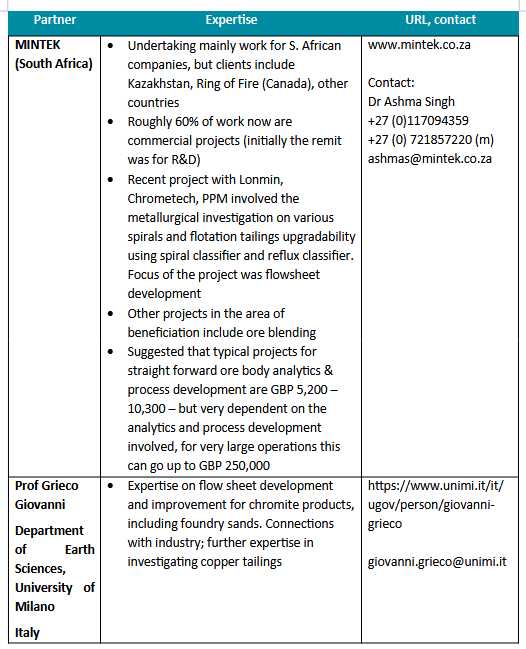
Potential partners to support chromite ore beneficiation development in Oman are presented in Table Error! No text of specified style in document.-5.
Table ‑5. Potential partners for chromite ore beneficiation.
List of Opportunities
All opportunities are listed below in their respective clusters. Click on each opportunity to find out more.