
PET CARE
Background
Pet ownership is a growing sector globally, with Asia Pacific showing the strongest growth in pet numbers over the last 18 years. The Middle East and Africa have historically seen low rates of pet ownership, but they have begun to increase in the last couple of years.
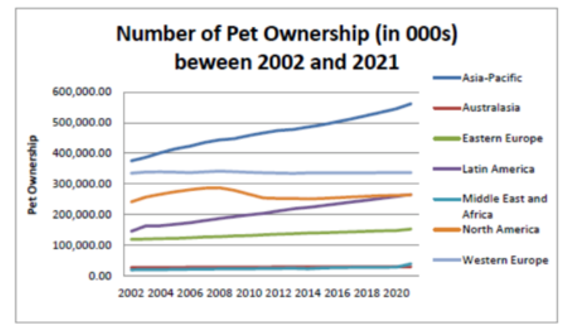
Figure 94
Dogs and cats are the most commonly owned pets with a global average rate of 33% and 23% respectively as shown in below figure. In the GCC, cultural considerations mean that cats are the primary mammalian pets, although dogs are sometimes kept; especially as working dogs such as guard dogs. For the purposes of this research only cats are considered.
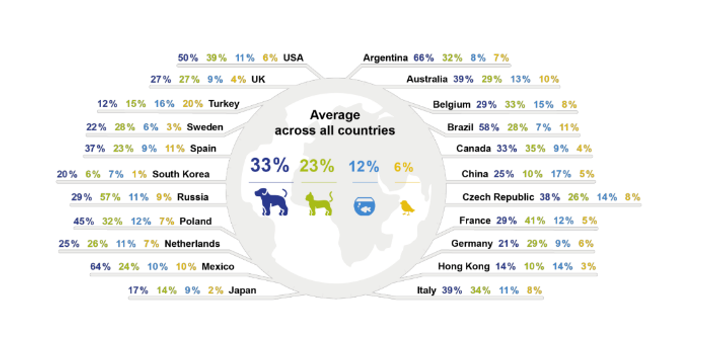
Figure 95
Market overview
Pet owners are keen to look after their pets well and to be seen to do so by others. Pet food, treats, snacks, toys, bedding, transportation, veterinary care, insurance and even burial/cremation services are all markets that cater for these needs.
The opportunities
1- Pet litter
- Background
Pet owners need to spend money on caring for their pet – the pet care market. For pet litter, clay- based products are considered the most effective, and can be marketed as organic as shown in below figure. The competition is from low cost, recycled materials made from agricultural waste products, paper or similar materials.
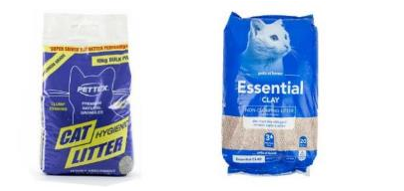
Figure 97
There is no known manufacturer of pet litter in Oman. However, it is known that deposits of the required clay raw materials exist in Oman (bentonite or potentially attapulgite).
Key features of Pet litter:
- Cat box fillers can be categorized into two types: conventional[128] and clumping[129]. Although the size of the granules varies, conventional cat box filler can be described as gravel-like in texture. Most brands claim to be dust-free or dust-reduced and to have a deodorizing agent. With conventional litter, the contents of the cat box must be discarded every time the box is cleaned in order to ensure that the cat has a thoroughly fresh supply of litter.
- Dust is a significant issue; known to affect the cat through inhalation and entering the eyes which can cause irritation. It is also a concern to humans, particularly during changing/cleaning the litter tray and from disturbance from the cat’s natural behaviour during the use of the tray. There is also concern about pathogens/allergens being carried by the dust.
- The smaller granule litter sticks together when it comes in contact with liquid, hence the term “clumping.” When clumping litter is used, the cat owner can remove the clumps, then add more litter to the box, eliminating the need to refill it with every cleaning. The major drawback of clumping litter appears to be its tendency to “track,” that is for the finer granules to stick to the cat’s paws when it leaves the box, adding further to concerns about dust in the home environment.
- A new product in the cat box filler industry is called “indicating cat litter.” This product changes colour to indicate the pH level (a measure of acidity or alkalinity) of a cat’s urine. Knowing the cat’s pH level is important in managing feline lower-urinary-tract disease (FLUTD), a condition that, in its most serious form, can kill domestic cats.
- Typical facilities for the production of pet litter
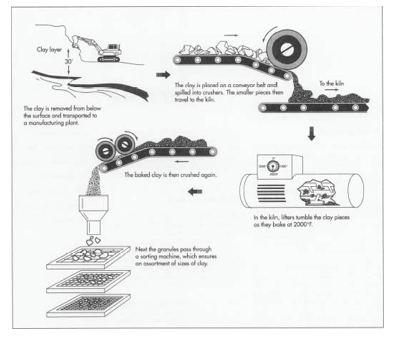
Below and as shown in below Figure we describe the key steps in the manufacturing process for pet litter.
Clay preparation – drying and crushing
- The clay is loaded onto conveyor belts and spilled into giant crushers. The crushers break the clay into smaller pieces, then deposit them onto another conveyor belt, which feeds the clay into a kiln.
- The kiln resembles a horizontal chimney or sewer pipe, 100 feet (30 m) or more in length. Inside the kiln, where temperatures can reach 2000°F (1093°C), lifters tumble the clay as it bakes. The clay continues its baking process until it has travelled the entire length of the kiln.
- As the clay emerges from the kiln, it is fed into a second crusher. Here, rollers crumble the clay to its final consistency.
Sorting
- The granules pass through an enclosed machine that contains a series of screens stacked one on top of another. Here, the various sizes of granules are sorted. Because litter is less absorbent when granules are the same size, the sorting process ensures that an assortment of sizes are represented.
- Clumping litter, which are ground to a smaller size than conventional litter, are frequently blended with sodium bentonite. A dust-controlling agent is then added to the ground clay to supress dust created when particles rub against one another from becoming airborne. Most cat litter manufacturers also add deodorizers.
Quality Control /Packing
- The need for precise clay moisture levels has become a critical component during production. Being such a porous material, clay can easily become either too wet or too dry wasting manufacturers time and money.
- MoistTech Corp provide moisture measurement devices for quality control
- The final step is packing into paper or plastic based bags
The facilities required fall into two production steps.
- Production of the bentonite granules
- Grading/pelletising, additive mixing and packing
Canvas
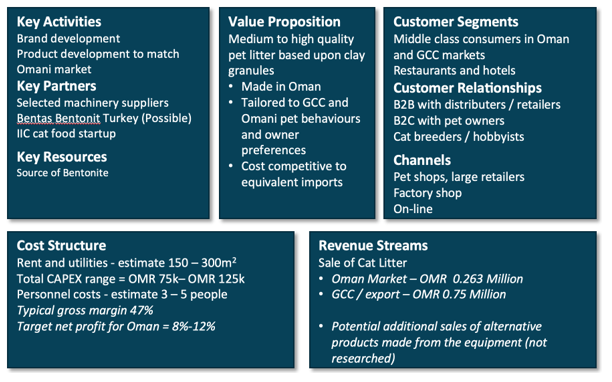
Figure 101
Further Information
This page provides an introduction and overview of the nature of the selected opportunity. For more detailed information or to get involved with this opportunity, please contact IIC: info@iic.om