
Expanded clay aggregate
Background
Expanded clay aggregate (ECA) is a specialist aggregate that is lightweight and has a number of interesting properties that make it suitable for a variety of applications. As a building material, the key characteristics of ECA include:
- 1/5 of the density of standard aggregate (300-600kg/m3)
- Excellent thermal and acoustic insulation properties
- High porosity and spherical shape aids water drainage
It is used in a range of building and infrastructure applications including building foundations, around pipelines, rooftop gardens, and in road construction and can be incorporated into lightweight building blocks, as shown in below figure.
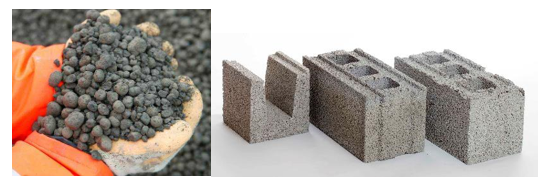
Figure 40: lightweight building blocks
As well as the inherent benefits due to the material properties, ECA offers a number of additional benefits for construction companies including:
- Faster construction – using bagged ECA, two labourers can build a 40 m2 base in one hour (see Figure below ) compared to two days for three labourers using standard hardcore and polystyrene insulation.
- Lower transportation costs – The lightweight nature of ECA means fewer delivery lorries are required
- Easy to handle – a 50 litre bag ways just 15 kg making it easy for one labourer to handle without risk of injury
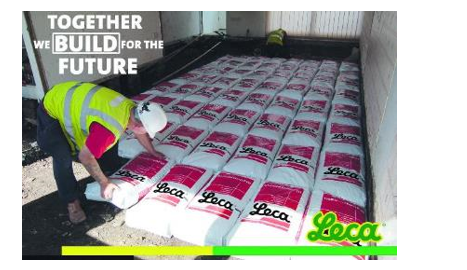
Figure 41: Faster construction, using bagged ECA
Typical facilities for the production of expanded clay aggregate
ECA is produced through the expansion of small pellets of clay within a rotary kiln as shown in below figure. Small pellets of clay are formed and dried before entering the rotary kiln. The rotation of the kiln helps to form the pellets into rough spheres.
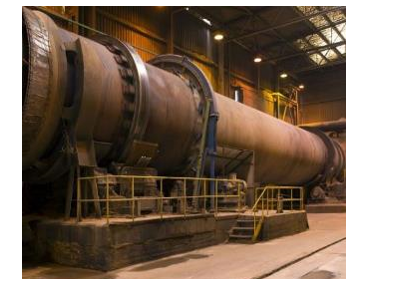
Figure 42: rotary kiln
For more information:
As the material is heated to around 1100 °C, chemical reactions inside the spheres generate gas. As the surface of the spheres remains closed, the gas formed inside the pellet cause the formation of large pores and an expansion of the pellet – as shown in below figure.
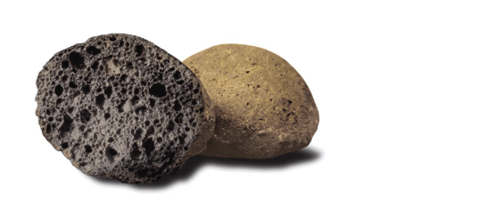
Figure 43
The pellets are then cooled and sorted into different fractions based on their size and stored as loose fill or bagged. The main process steps are shown in below figure.
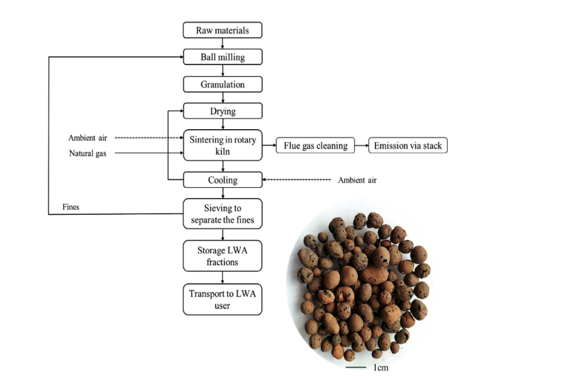
Figure 44
Canvas
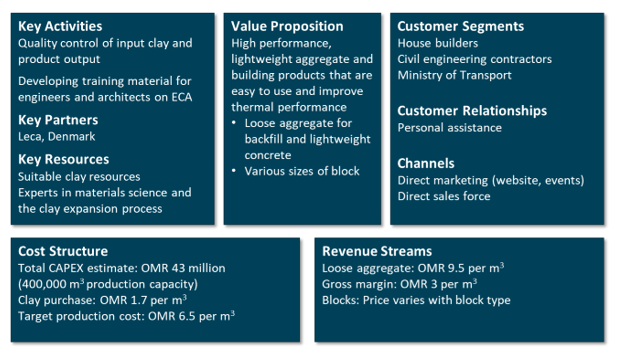
Figure 45
The primary focus of the expanded clay aggregate application will be loose-fill ECA and ECA-based blocks for building and infrastructure projects. Further applications in agriculture, wastewater treatment and water filtration can be explored at a later date.
Further Information
This page provides an introduction and overview of the nature of the selected opportunity. For more detailed information or to get involved with this opportunity, please contact IIC: info@iic.om