
Background
Oman has rich quartz deposits and limited sampling was conducted in the late 1990s but more sampling and characterization is needed to determine its industrial potential1. A major deposit of quartzite rock, with total thickness about 500 m, was identified in the Saih Hatat area, and is estimated to hold about 4.5 million tonnes of silica quartz2.
Other smaller deposits have also been identified but their industrial potential needs further evaluation:
-
Wadi Baw: Has quartzite strata with thickness between 0.5 m and 2 m, and with a thin covering of silica sand; sampling needed to determine its industrial potential.
-
Ar Raqi: Quarzite rock beds, maximum thickness about 3 m and in some areas no more than 0.5 m, with surfaces coated with ferrugination crust, and expected to hold potential for use as raw material in production of silicon metal.
-
Wadi Shaat: Multiple quartz vein outcrops, thickness from 1 to 2 m.
-
Wadi Adai: Quartz veins of various thickness.
The two main industrial products of quartz are silicon metal and high purity quartz3. Silicon metal is produced by reduction of quartz (SiO2) to silicon metal (Si), by heating at over 2500°C and is discussed in Section 18. This opportunity focuses on the characterization of, market, and applications for high purity quartz, which is highly pure silica (SiO2), i.e. there is no change in the underlying quartz chemistry.
Characterization of quartz deposits
Once a quartz deposit has been identified, representative samples are taken, starting with surface sampling. Bulk surface samples from quartz bodies are sampled first and are sent for upgrading to assess the levels of purity that can be achieved1. If promising results are achieved, exploration drilling is worthwhile for a detailed characterization. Representative sampling with the identification of appropriate processes to remove impurities is crucial to determine the potential of any raw quartz deposit for high purity and high value applications2.
Naturally occurring high purity quartz always has inclusions, present either as finely dispersed solids (e.g. muscovite, rutile, calcite, etc.) or fluid (liquid and gaseous) inclusions. Typically the bulk sample is chemically characterized first, and then the size and distribution as well as the chemical composition of the mineral and fluid inclusions are explored.
Bulk chemical analysis
Bulk chemical analysis of quartz starts with grinding/comminution, following contamination-free protocols. It is followed by acid digestion, followed by trace element analysis. The most widely used technique for detection of major chemical impurities is X-ray fluorescence. Minor impurities down to the sub-ppm level can be detected with further analytical techniques, including specialized spectrometric methods, electron spin resonance, cathodoluminescence, capillary ion analysis and gas chromatography. During initial characterization, typically 16 trace elements, defined to be most critical depending on the target application area, are usually determined:
-
Alkali metals, calcium and heavy metals––critical in lamp tubing and semiconductor applications
-
Uranium and thorium––critical for microelectronics applications
-
Boron and phosphorus––critical in solar silicon applications
Multiple measurements, conducted to IOTA industry standards (see Section 19.3) are required to ensure a very high level of confidence for high-purity quartz applications.
Characterization of mineral inclusions
Although high purity is determined by the bulk composition, more information is needed to set up the most appropriate beneficiation route. Raw quartz is analysed to determine the size of inclusions, their chemical composition, their spatial distribution, and localization of isomorphic substitutional elements such as Al or Ti in the quartz crystal lattice.
Analysis of mineral inclusions involves the following techniques:
-
Optical microscopy to gain an overview of the sample texture and structure.
-
Micro X-ray fluorescence to analyse the nature of the inclusion.
-
Combination of optical microscopy with advanced spectroscopic methods such as Raman spectroscopy or electron paramagnetic resonance spectroscopy to localize impurities such as aluminium in the quartz crystal lattice and inclusion bodies.
Fluid and gaseous inclusions must also be analysed. Fluid inclusions are especially critical when aiming to melt high purity quartz for making specialized laboratory glassware, as they are often brines with high concentrations of alkalis, which need to be removed to meet the chemical specification of the glass. Gaseous inclusions are also problematic, as molten quartz is highly viscous and all gases that cannot escape or dissolve will form bubbles that impair the quality of the final product. Fluid and gaseous inclusions are analysed using techniques such as optical microscopy combined with micro thermometry and Raman spectroscopy. These analyses are then used to determine options for process development, such as thermal treatment, or opening of fluid inclusions by specific comminution equipment. All these analyses are a prerequisite for the optimum design of bench, pilot, or technical scale quartz processing.
Production of HPQ
The world’s purest quartz ore site is in Spruce Pine, California. Two companies, Sibelco/Unimin and Quartz Corporation, mine quartz from this site. HPQ produced by Sibelco/Unimin dominates the HPQ market, with smaller producers, notably the Quartz Corporation and various Chinese and Russian producers, mining quartz from other sites to make up the rest of the market. The industry standard for high purity quartz (HPQ) is defined by the product mined by Sibelco, which is called IOTA product. This equates to 99.998% of SiO21. It sets a high purity benchmark for the rest of the HPQ market and HPQ is normally expressed relative to IOTA standards. For example, the best deposits found in Australia to date have been unable to meet the IOTA standard even after processing.
Production of HPQ from natural quartz requires a series of intensive physical, chemical, and thermal processing steps (Figure 19‑1). Natural quartz can therefore be upgraded to produce HPQ, although the extent to which impurities can be removed must be determined empirically: for example, surface impurities can be removed by washing, but impurities bound within the quartz crystal lattice cannot be removed and therefore limit the purity that can be achieved2.
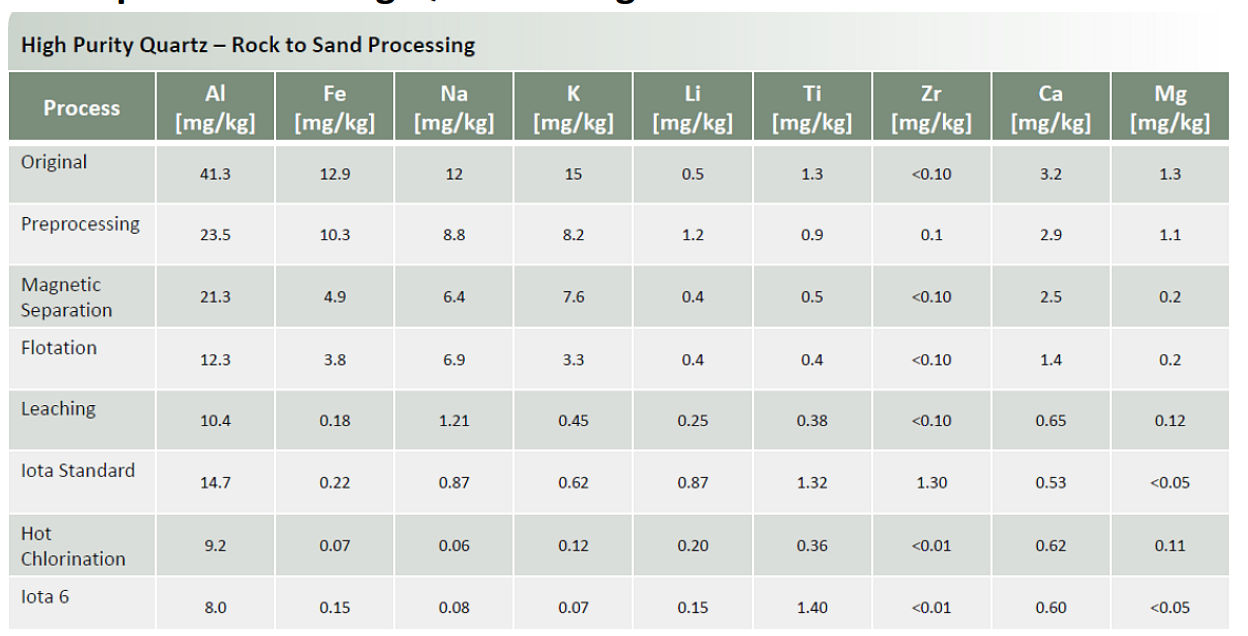
Figure 19‑1. Steps in processing quartz to higher value material.
The global HPQ market
In 2018 the global market for quartz was estimated at 99,321.1 tons and a value of $842.7 million. This was estimated to rise to 117,832.9 tons/$1,029.6 million by 2021, and 159,530.1 tons/$1,451.8 by 2026. These markets are relatively small but potentially valuable, with applications in the manufacture of solar panels, semiconductors, silicon metal, and high-tech glass.
Figure 19‑2 shows global supply and demand for quartz across different geographic regions. Although the MENA region shows very small consumption compared with most other geographic regions, the near absence of production in the region suggests that at least in the longer term, there could be an opportunity for an Omani supply of HPQ to meet regional demands.
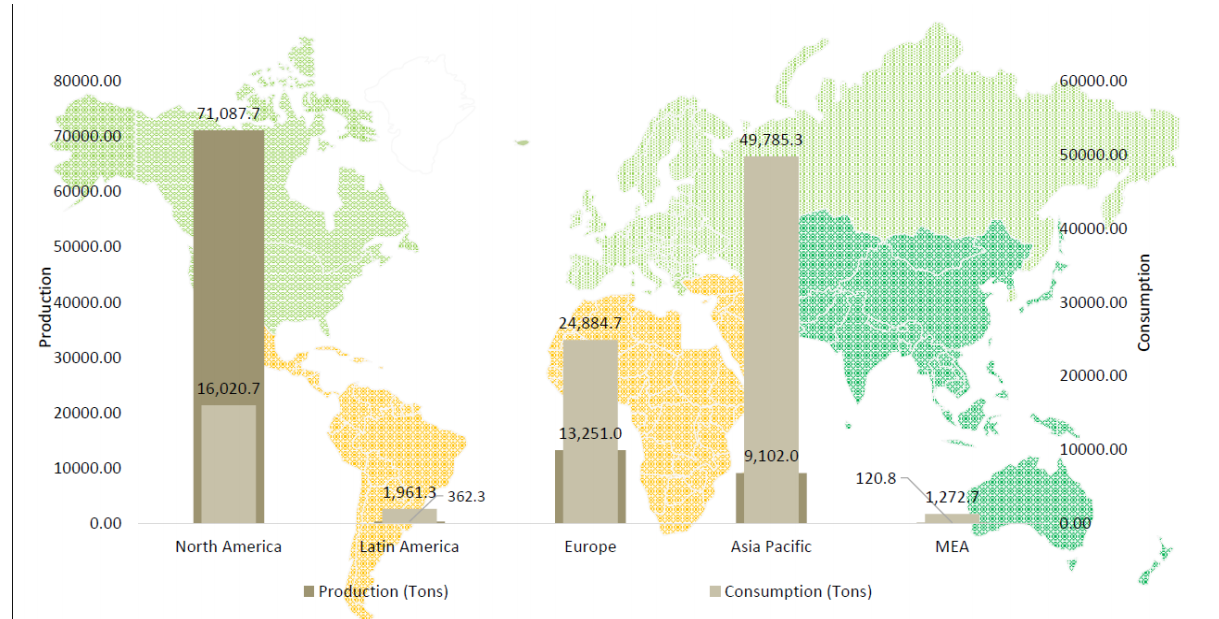
Figure 19‑2. Supply and demand in the global HPQ market
Prices for high purity quartz (HPQ)
Simplified grades of HPQ are:
-
Low grade HPQ: SiO2 minimum 99.9%
-
Medium grade HPQ: SiO2 minimum 99.99%
-
High grade HPQ: SiO2 minimum 99.997%
Figure 19‑3 indicates the prices that can be commanded for each grade and the operating expenditure associated with production.
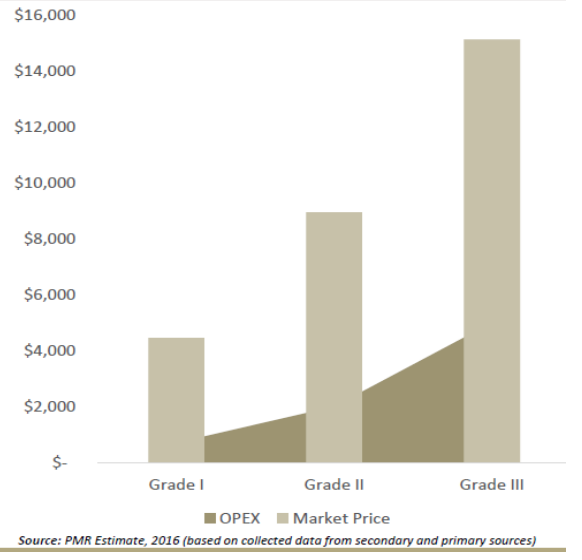
Figure 19‑3. Global HPQ: market price per ton and operating expenditure for different grades418
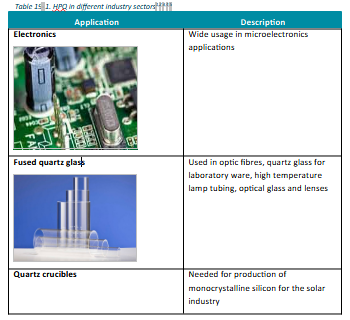
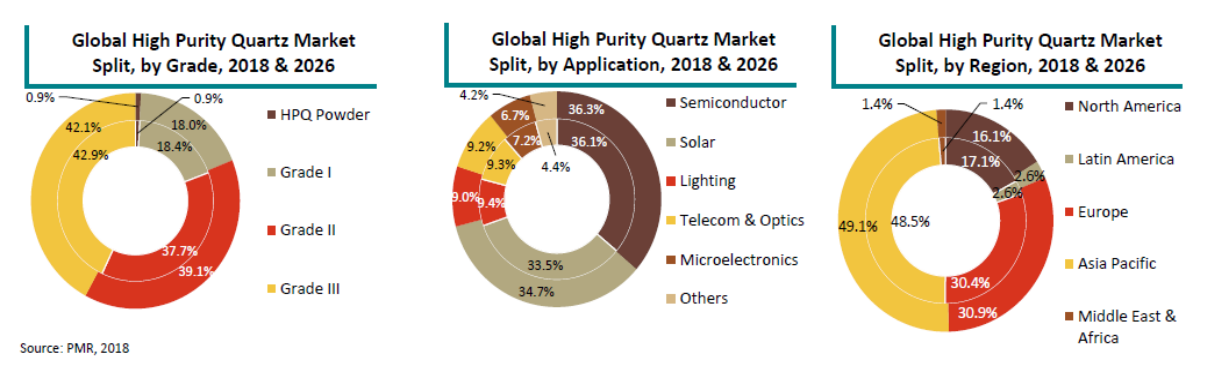
Figure 19‑4. HPQ markets by type, application, and region, in 2018 and projected for 2026
Establishing a supply of HPQ
High Purity Quartz Ltd., trading under the brand name of UltraHPQ, is an Australian public, unlisted company that aims to be a new entrant into the global ultra-HPQ market. This section provides an outline of UltraHPQ’s approach, intended as an illustrative example to indicate some of the considerations for Oman, should a promising quartz deposit be identified in the Sultanate.
UltraHPQ aims to become one of the global top three suppliers of ultra-HPQ and to help to diversify the supply chain away from its heavy reliance on the Spruce Pines deposits via Unimin/Sibelco and The Quartz Corporation1,2. UltraHPQ is the registered holder of a long-term mining lease over the Sugarbag Hill HPQ deposit in Queensland, Australia. Sugarbag Hill is a hydrothermal quartz deposit with an in-situ purity of 99.00% SiO23. The quartz body is approximately 800 m long. The quartz has been tested at depth, using 28 holes drilled to a depth of 60 m. It has a JORC Measured and Indicated Resource categorisation of approximately 1.2 million tonnes of SiO2. The quartz deposit will be further refined and purified to solar and semiconductor grade products using a combination of physical mineral separation techniques, acid leaching, and high-temperature treatments4. The processed quartz products are initially targeted at export markets, but in the longer term, the intention is to foster local Australian manufacturing opportunities.
UltraHPQ aims initially to produce a product of 99.995% SiO2 purity, and to use the cashflow from this product to fund the production of higher purity products. Key financials estimated as of September 2020 are provided in Table 19‑2.
Table 19‑2. Financial details of costs and production volumes for UltraHPQ’s planned products1.
|
“HP5” |
“HP7” |
“HP9” |
|
|
Purity |
99.995% SiO2 |
99.997% SiO2 |
99.999% SiO2 |
|
Target markets |
Fibre/optical lenses, medical quartzware, lighting |
Solar |
Semiconductors |
|
Production |
Year 1: 15,000 tonnes Year 2: 30,000 tonnes Year 3: 45,000 tonnes |
Target 24,000 tonnes per year |
Target 6000 tonnes per year |
|
Capex |
AUD 35 million |
Not given – funded from HP5 cashflow |
|
|
FOB cost |
Approx. USD 500 per tonne |
Approx USD 1000 p/t |
Approx USD 1500 p/t |
|
Estimated revenue |
USD 750 – USD 2500 p/t |
USD 3000 – USD 7500 p/t |
USD 12500 p/t |
UltraHPQ expects to be the lowest cost producer in the market because of the nature and location of its resource. The company cites significant barriers to entry in this market, including resource in situ purity, beneficiation process know-how, economic viability, and monetization.
Business canvas
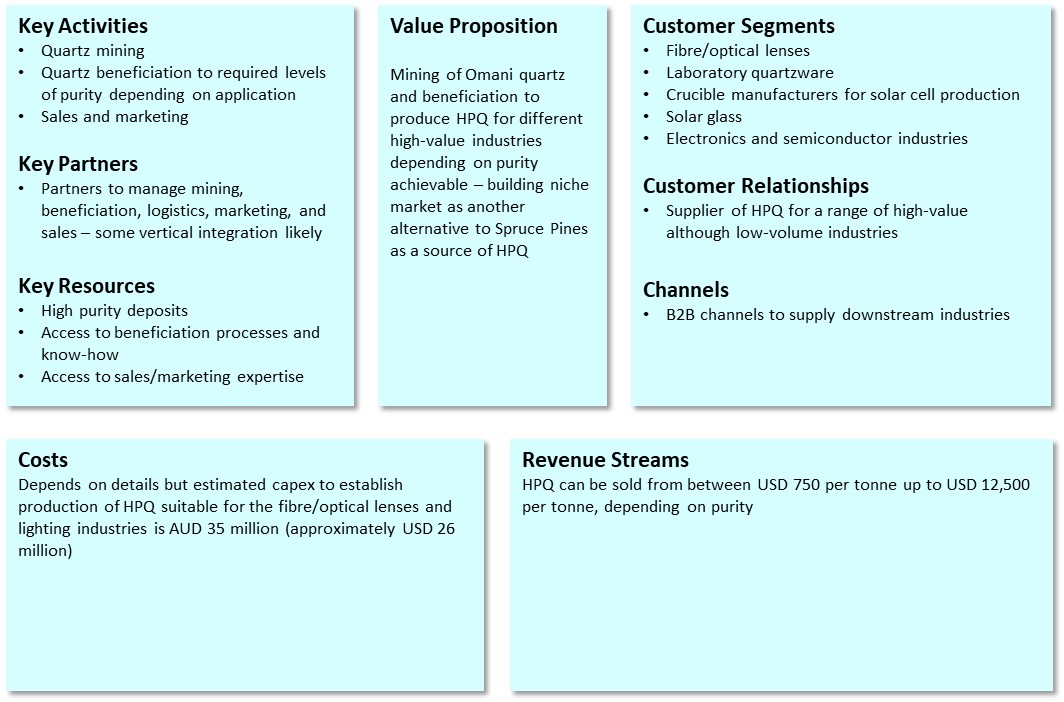
Figure 19‑5. Business canvas for HPQ
Next steps
A summary of next steps for Oman is as follows:
-
Conduct sampling and characterization of quartz resources, starting with testing bulk surface samples to see the level of purity that can achieved, and followed by exploration drilling where surface sampling provides promising results1.
-
Lower purity of quartz can be used to produce metallurgical grade silicon (Section 18). If higher purities are achievable, exploring the production of HPQ is worthwhile.
-
To produce HPQ, Oman will need to partner with companies able to provide know-how and equipment for the beneficiation process431. Partners able to support with evaluating economic viability and monetizing the opportunity will also be needed2. For example, UltraHPQ uses Wogen Resources, an international specialist distributor based in London but with a strong Chinese presence3. Wogen has the expertise to optimize marketing and sales for UltraHPQ.