
Background
Silica sand can be processed, either ground into silica flour, or reacted to create various silica derivatives. Illustrative examples of main product groups are shown in Figure 17‑1. The resulting products command higher prices per ton than bulk silica sand (Table 17‑1). The range of possible products is wide and this section provides a preliminary overview of options; Oman will need to prioritize where to invest in development.
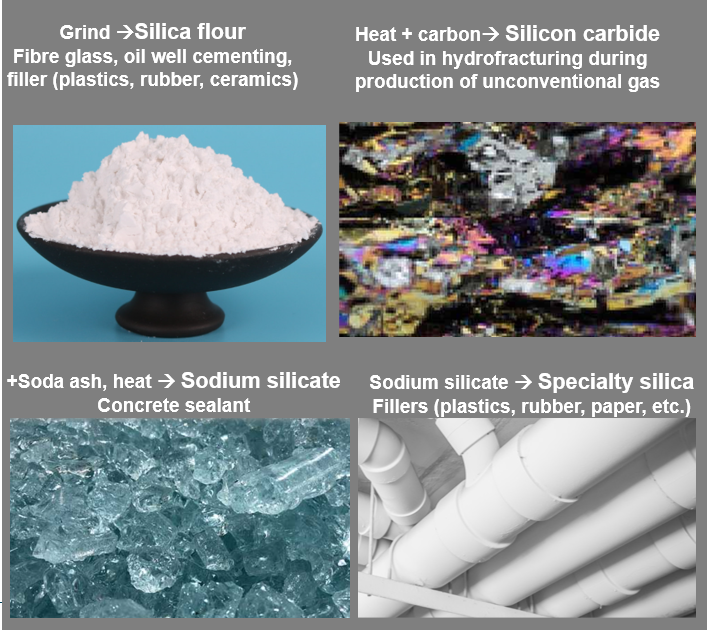
Table 17‑1. Price and global market value of added-value silica products
|
Product |
Price per ton |
Global market value |
|
Silica flour |
$421 |
$564 million in 2021 Predicted to grow to $684 million by 2025 (CAGR 3.94%)2 |
|
Sodium silicate |
$190 – $2603 |
$7.2 billion in 2019 Predicted to grow at a CAGR of 3.7% from 2020 to 20274 |
|
Precipitated silica |
$400 – $1500 |
$1.96 billion (2018) Expected to reach $3.34 billion by 2025 with a CAGR of 7.9%5 |
|
Silica gel |
$750 – $1700 |
|
|
Colloidal silica |
$500 – $1000 |
>$0.8 billion (2018)8 |
|
Silicon carbide |
$500-$1000 |
$0.749 billion (2020)9 |
|
Fused silica |
$50010 |
$0.59 billion (2020)11 |
Silica flour
Production of silica flour
Silica sand is produced by grinding in a ball mill. For example, in Saudi Arabia, a ball mill plant with ceramic lined balls was supplied by AKW and produces about 10 to 15 tons of silica sand per hour. The total cost was about 7 million Euros: 2.5 million Euros to purchase the equipment, with a further 4.5 to 5 million Euros for shipping, installation, etc1.
Market size and applications of silica flour
Silica flour has many applications. It is used as a chemical filler in production of plastics, rubber, paint, coatings, fiberglass and ceramics. It is used in oil-well cementing because of its mechanical strength and permeability. It is also used as a natural absorbent in personal care, cosmetics, and pharmaceutical products (including skincare, soap, and toothpaste).Significant markets in the Middle East are fibreglass production, oil well cementing, and chemical filler. The cosmetics industry is a more significant application in Europe; the European cosmetics and personal care market is the largest in the world1.
Opportunities for silica flour in Oman
The most significant opportunity for silica flour in Oman is fibreglass production followed by oil well cementing, because these industries are already active and could benefit from local production rather than needing to rely on imports. Several Omani companies are active in fibreglass production. For example, Oman’s National Fibreglass Factory (NFF) reported plans to build a new manufacturing plant at the Khazaen Economic City in the Barka region, which aims to support the growing demand for glass-reinforced plastics used in commercial and residential construction across Oman1. Other fibreglass manufacturers in Oman include Al Gobrha Heights LLC in Rusayl Industrial Area, Muscat2 and Oman Made in Salalah3. Composite Pipes Industry LLC is a leading manufacturer of glass fibre reinforced plastics systems in Oman and supplies piping solutions globally, with annual production capacity of 8400 MT4; illustrative example of fibreglass piping in Figure 17‑2). Fibreglass therefore appears to be a significant potential market for Omani silica flour.
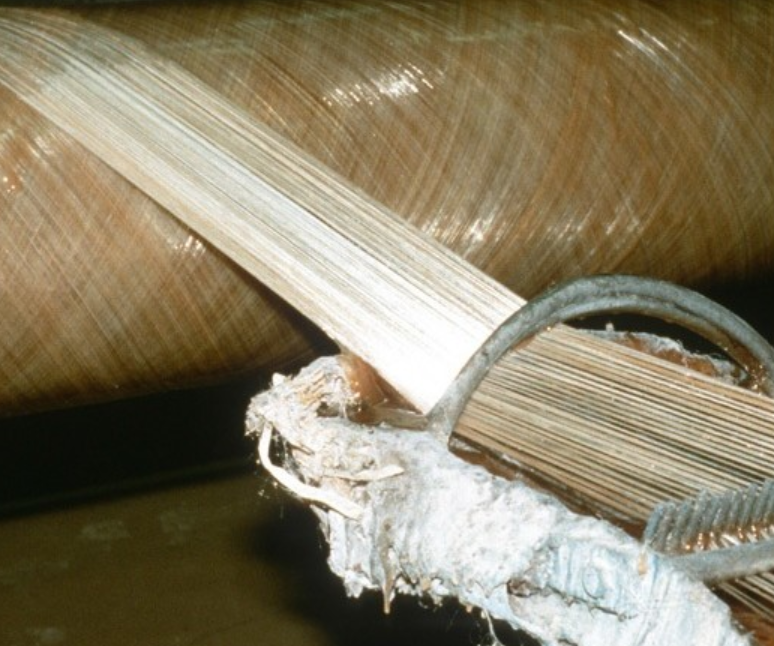
Figure 17‑2. Fibreglass piping1
Oil well cementing also provides an opportunity for Omani silica flour with several companies producing oil well cement or providing cementing services. For example, Qurum Energy Services is an Omani oilfield services provider and operates oil-well cementing units to meet the needs of local Omani operators1. Oman Cement Company also produces oil well cement2, and Abraj Energy Services SAOC in Azaiba, Oman provides well services including cementing technology3.
Sodium silicate
Production of sodium silicate
Sodium silicate is produced by heating silica sand (with purity of at least 98.5% silica content) with soda ash. It can be used directly in a wide range of applications, or processed further to produce precipitated silica, silica gel, or colloidal silica.
Costs for establishing the facility depend on multiple factors. For example, in the Ma’an Development Area in Jordan, investment is sought of $4 million to establish a factory to produce sodium and potassium silicates (with sodium silicate as the major product). The payback period is expected to be within the fourth year of full operation with IRR for the project expected to be around 27%1. In the USA, establishing a facility for production of liquid sodium silicates in South Carolina in 2018 required an investment of $20 million2.
Market size and applications of sodium silicate
The construction industry is the main application of sodium silicate where it is used directly in production of cement as a binder, filler, and adhesive, and to provide hardening, as well as in production of concrete and fireproofing materials and in soil stabilization for construction. It is also used in manufacture of soaps and detergents and in liquid form for pharmaceutical applications.
Opportunities for sodium silicate in Oman
Trade data show that Oman overall operates an overall trade deficit in sodium silicate, to the value of $1,030,000. Imports are sourced mainly from Saudi Arabia and Egypt, with minor contributions from India and South Africa. The only country to which Oman exports sodium silicate is Qatar (Figure 17‑3). These observations suggest a need for sodium silicate in the Oman domestic market. However, a significant export market seems less promising, as the nearby export markets of Saudi Arabia, Egypt, and India all operate a trade surplus in sodium silicates.
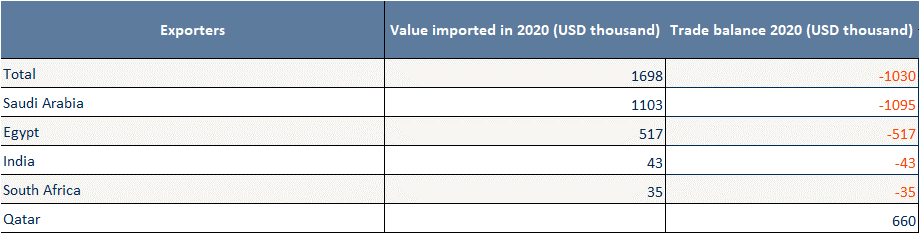
Figure 17‑3. Value of imports of sodium silicate to Oman in 20201
A domestic supply of sodium silicate could be used to support downstream Omani industries. The main consumers are the construction industry and the detergent industry, both of which are active in Oman. The construction industry has been severely impacted by the pandemic, especially residential and commercial construction, but spending on infrastructure construction is expected to maintain momentum, supported by public spending1. However, ‘Vision 2040’ aims for the construction industry to contribute significantly to Oman’s diversification away from oil and gas and the industry is predicted to record a CAGR of 10.6% to reach OMR 7.6 billion by 2024.
Sodium silicate is also used in manufacture of detergents and pharmaceuticals. Several Omani companies manufacture a wide range of detergents including The National Detergent Company SAOG, Talsafi Trading, and Zay Detergent Industry LLC2,3,4, suggesting potential Omani customers for a domestic supply of sodium silicate.
Sodium silicate derivatives
Market size and applications of sodium silicate derivatives
Precipitated silica, silica gel, and colloidal silica are all made from sodium silicate feedstocks. The main market applications are:
-
Precipitated silica: Filler in rubber, especially in tyres, and as a filler in plastics, paints and coatings, food, beverage, agriculture and animal feed, and personal care (including toothpaste, creams, lotions, and cosmetics). The strongest driver of precipitated silica consumption is substitution of the filler carbon black with precipitated silica in car tyres because precipitated silica is a more environmentally friendly alternative.
-
Silica gel: The major application of silica gel is as a desiccant, especially for food, pharmaceutical, electronics, and other products. It is also used in chemical production (defoamers and dispersants), cat litter, petroleum refining, and production of toiletries.
-
Colloidal silica: Colloidal silica is used in papermaking, abrasives, catalysts, coatings, surfactants, adsorbent, investment casting, and concrete production.
Opportunities for sodium silicate derivatives in Oman
Precipitated silica
Precipitated silica is the most significant product from sodium silicate with the largest market size. A major application of precipitated silica is as a filler in rubber tyres, and such an application is likely to provide the demand needed to justify investment in establishing a precipitated silica manufacturing plant. Although trade restrictions associated with the Covid-19 pandemic led to a dip in rubber prices through 2020, demand is expected to increase through 2021 as the pandemic recedes1.
Saudi Arabia has recognised an opportunity to establish a manufacturing plant for precipitated silica to serve regional and global markets2. The Saudi plan expects to require investment of $147 million to set up a plant with manufacturing capacity of 20 – 25 thousand metric tons with an IRR of more than 12%. Saudi Arabia has a potential domestic market for precipitated silica because the National Tire Company (NTC) is planning a tyre factory in Jubail, and also highlights expected demand for precipitated silica in agrochemicals as well as in edible salt and powdered food products.
However, Oman does not have a tyre manufacturing industry, and attendees at the Minerals workshops run by the IIA in July 2021 suggested there would be few opportunities around agricultural applications in Oman because there is little western-style intensive agriculture. Overall, these observations suggest that precipitated silica is currently unlikely to be a significant opportunity in Oman.
Silica gel
The main industry application of silica gel is as a desiccant. Globally, the desiccants market is expected to grow, although the Middle East market in general is predicted to show relatively modest growth1. As a desiccant, silica gel is used for shipping of food, beverage, pharmaceuticals, electronics, and other products, so could potentially support Omani export industries as they develop.
Jordan is seeking investment to establish a silica gel factory in the Ma’an Development Area. The capital needed is $2 million, and the key financial indicators are estimated as IRR of approximately 21% and payback for the project with the fifth year of operation2.
Silica gel is produced by some companies in Oman, including:
-
Oman Chemical Company supplies silica gel for oil refining3.
-
Muscat Chemical, which supplies silica gel for a wide range of industries (household, cleaning, personal care, oil refining, marine, metal working, coatings, etc.)4.
Other companies, including some based in India and the UAE, also supply silica gel in Oman5. The existing activity in silica gel suggests an opportunity to supply downstream markets in Oman if a silica gel manufacturing facility could be established in Oman. If this opportunity is of interest to Oman, market reports can be purchased that would provide indications of production costs, but data are not freely available online6,7.
Colloidal silica
Colloidal silica is used in papermaking, abrasives, catalysts, coatings, surfactants, adsorbent, investment casting, and concrete production. Muscat Chemical also supplies colloidal silica in Oman, but overall there is little evidence of suppliers in Oman1. Given the lack of activity in papermaking in Oman and the smaller market size of colloidal silica, this application seems unlikely to be a priority for Oman.
Fused silica
Production of fused silica
Fused silica has many synonyms: silica glass, vitreous silica, fused quartz, quartz glass, synthetic fused silica, and synthetic quartz1. It can be produced either from high-quality silica sand or from crystalline quartz by electrical heating of finely ground and highly pure sand or quartz (SiO2 content >99.6%).
Market size and applications of fused silica
The global fused silica was estimated at $0.59 billion in 20201, though the Middle Eastern market is a very small part of this. Fused silica is a high-quality product used in production of glass as well as in semiconductor applications, refractories, and investment casting.
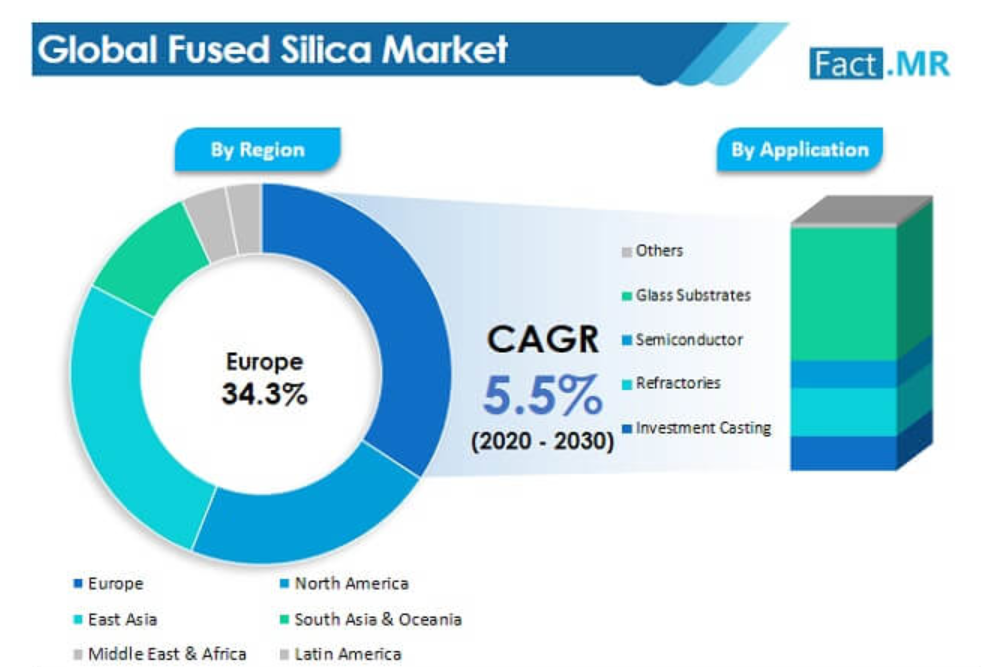
Figure 17‑4. Global fused silica market.
Market opportunities for fused silica in Oman
Online searches suggest that Omani companies are not supplying fused silica and it is supplied to Oman from India1. There is as yet no production in Oman of the high-quality laboratory glassware or semiconductor applications for which fused silica is used and manufacture of fused silica does not offer an immediate opportunity for Oman.
Silicon carbide
Production of silicon carbide
Silicon carbide (SiC), also known as carborundum, is a hard and chemically inert compound. It is produced by heating sand and carbon in a rotary kiln at about 2500°C:
SiO2 +3C à SiC +2CO
Silicon carbide can be produced in two grades: high quality, coarsely crystalline green SiC, and lower quality metallurgical grade black SiC.
Market size and applications of silicon carbide
The global silicon carbide market is estimated to grow from $749 million in 2020 to $1.812 billion by 2025, with a CAGR of 19.3%1. Silicon carbide is a semiconductor material widely used in electronics and semiconductor industries2. Its physical hardness leads to its use as an abrasive in processes such as honing, water jet cutting, and sand blasting. It is also used in the components of pumps used to drill and extract oil in oilfield applications. These applications all lead to increasing demand for silicon carbide.
Globally, the SiC market is dominated by growing demand from the power electronics industry and its use in smaller devices. The fastest growing market application for SiC is predicted to be its use in electric vehicles, where the CAGR is predicted to 40.8% through 2025. Increasing sales of electric and hybrid vehicles in China, Japan, South Korea, and India means that the global market for SiC is dominated by the APAC region (Figure 17‑5).

Opportunities for silicon carbide in Oman
Online searching suggests that Omani companies are not supplying silicon carbide, and silicon carbide in Oman is supplied by companies from India and UAE1,2. Saudi Arabia recognised an opportunity to produce silicon carbide and announced funding for a plant in 2009 as a joint venture between Sumitomo and Ahmad H. Algosaibi & Brothers. The aim was to ship most production to Japan, aiming for production initially of 24,000 tons per year; however, recent details of production from this plant are not readily available online3. These results suggest that there is not an immediate customer for silicon carbide in Oman and it is a longer term opportunity for the country.
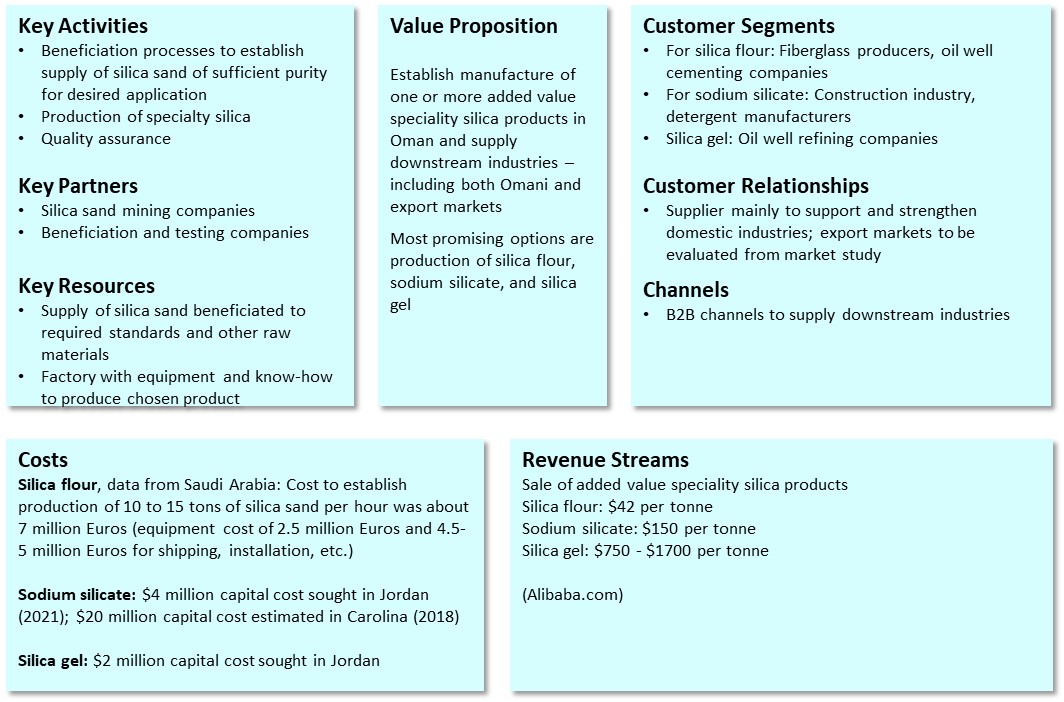
Business canvas
Next steps
Findings suggest that Oman has opportunity to reap greater value from its silica sand by investing in higher value products. The most immediate opportunities are in production of silica flour, sodium silicate, and silica gel, because there is strong demand in Oman. As downstream industries are increasingly developed in Oman, opportunities for the other added value silica products (colloidal silica, fused silica, silicon carbide, and precipitated silica) are likely to strengthen. To develop further focus in this area, characterization data of Omani silica sand deposits should be evaluated against market research data and business cases for different downstream products should be compared so that the most promising opportunities can be determined. Once a focus is determined, next steps involve gaining investment and establishing facilities, i.e. the generic process outlined in Section 16.7.