
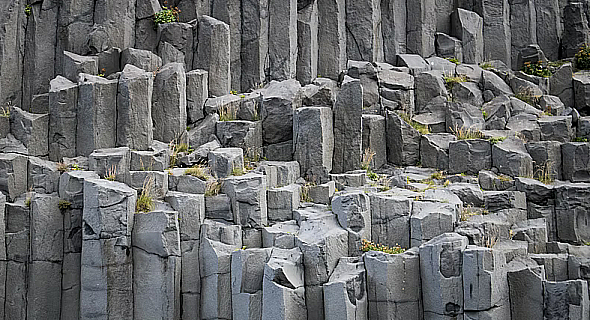
This Wikipedia is a dedicated knowledge base for the Basalt Sector in the Sultanate of Oman.
Section Contents:
This website is comprised of two main sections:
- Basalt Sector Overview – Overview of the global basalt sector and the current situation in Oman Sector
- Sector Introduction
- Local Overview
- Global Overview
- Basalt Sector Opportunities – Specific opportunities for innovation that were identified within the programme
- Introduction
- List of Opportunities
Basalt Sector Overview
Sector Introduction
The demand of composite materials and in particular polymer composite materials (PCM) are growing steadily. PCM are used in various industry and technology replacing traditional construction materials. Fibers are the basic components of composite materials. Glass and carbon fibers are used for making composites. However, the price and quality of these fibers are difficult to control. As such, there is a need for high technology fiber that have similar or better performance than existing fibers with lower price. Recent studies suggested the used of newly developed modern continuous fibers made from basalt stones[1].
Basalt is a mafic rock[2] of volcanic origin, composed largely of plagioclase feldspar (labradorite or bytownite) and dark minerals such as pyroxene and olivine. Basalt is the equivalent of gabbro and its extensively quarried, crushed, and sold as “trap rock”. Its main use is a crushed rock in construction, industrial and highway engineering. Nowadays, basalt can be made into fine, superfine and ultrafine fibers and used in manufacturing. In addition to their lower price, basalt fibers are better than other fibers in terms of thermal stability, heat and sound insulations, vibration resistance and durability.
Basalt is a green non-combustible material. Its reaction with air or water is non-toxic. Basalt continuous fibers offer prospect for new range of composite materials and products. It can replace almost all applications of asbestos and has three times its heat insulating properties. Basalt base composites can replace steel and known reinforced plastics (1 kg of basalt reinforced composite equals 9.6 kg of steel). Basalt pipes designed for variety of applications can be left for more than 50 years without maintenance or electric or technical protection. Basalt fibers together with carbon or ceramic fibers as well as various metals are the most advanced and exiting area of application, as they can develop new hybrid composite materials and technologies. Basalt special properties reduces the cost of products whilst improving their performance. More than hundreds specific unique manufacturing techniques using basalt fiber materials and products have been developed and patented in Russia.
Properties of Basalt Fibers
The basalt rocks of only certain chemical and workable characteristics can be used for production of basalt fiber of necessary strength, chemical and thermal durability and electric insulating characteristics. Figure 52 summarizes basalt fiber’s properties.
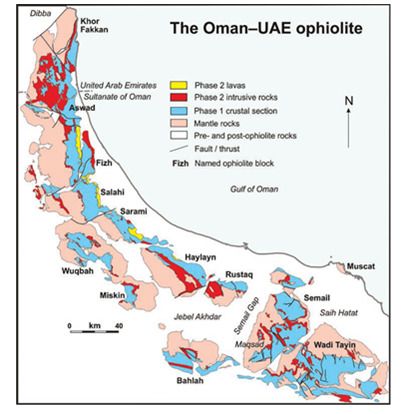
Figure 1: Properties of Basalt Fibers
Local Overview
1.2.1. Availability of row materials [3]
The Oman Mountains form an arc extending for 700 km along the northeast edge of the Arabian Peninsula. Important volcanic activities occurred in Oman during several phases. These activities formed the volcanism areas which characterize most of the Oman Mountains (Figure 53). These areas include:
- Cambro-Ordovician Volcanism of Al-Hquf area
- Late Permian volcanism of Saih Hatat
- Triassic volcanism of the Hamrat Duru Basin
- Haybi volcanic complex
- Al-Ruwida Seamount volcanic complex
- Tertiary volcanism in Eastern Oman
- Sheeted dike complex and pillow lava of the Semail Ophiolite
Prof. Sobhi70 Nasr from Sultan Qaboos University Sultan Qaboos University studied these volcanism areas and the potential to use them to produce basalt and basalt fibers. The study revealed that the volcanism started as an alkali basalt (basanites) in the Cambor-Ordovician in the Southern and Central part of Oman. These volcanic are scattered and small in their size and reserves. Permian volcanism in the Saih Hatat area is more variable and consists of basalts, andesite, trachyite and trachyandesite. Similar is the Triassic and the Haybi basalts in the Hawasina basin. Although the thickness of these basalts is huge and reach more than 600 m, but most rocks are altered and metamorphosed.
The Tertiary rocks are very common in the eastern part near Al Ashkhara. These rocks are suitable for basalt industry. However, they are of local extent. The Ruwaida basalt is extensive and of good quality for basalt industry. However, its location is far, 300 km from Muscat and any industry should be located nearby. The Ophiolite extrusive volcanic are widely distributed in Oman. They reach a thickness of more than 1000 m, with huge unlimited reserve. However, most samples are altered and contain sulphides.
The largest basalt occurrence is represented by the sheeted dike basalts of the Semail Ophiolite. These extend along a distance of more than 300 km from south to north of Muscat. Outcrops ranges between 30 to 200 km2. The sheeted dike basalt shows a good chemical, textural and mineralogical composition which can be utilized for basalt industries. Melting test on these basalts show good results. The best location to start with is the Rusayl area near Muscat City.
Figure 2: Oman Ophiolite Mountains
1.2.2. Basalt deposite reserve
Based on geological and google maps it can be concluded that a huge and enormous reserve of basalts is found in Oman. The largest reserve found is that for the sheeted dike complex which extend over a distance of 400 km from Ibra in the south to Aswad-Shinas in the north. The smallest are of out crops is up to 30 km2 (Rusayl and Ahmadi). These can reach up to 200 km2 in Shinas, Jizi, Fizh and Aswad areas.
Global Overview
1.3.1. Market Overview
The global basalt fiber market is expected to witness a significant growth due to high demand from various industries. Figure 3 shows that the main bulk applications are in automotive, construction and electrical and electronics industries. Basalt fiber market is anticipated to grow during the forecast period owing to tremendous growth in the automotive industry especially in the emerging economies such as India, China, and Brazil. Moreover, the basalt industry is expected to witness high demand from automobile and construction sector owing to their resistance power to varying temperature and chemicals, high mechanical strength, low water absorption and durability. These fibers are expected to replace the expensive glass and carbon fibers in various industries. Increased government spending in various countries including Saudi Arabia, Mexico and BRICS is expected to push demand for this industry[4]. The basalt fiber market is projected to grow at a CAGR of 11.8 % from 2019 to 2024 to reach a value of around USD 400 million by the end of this period[5].
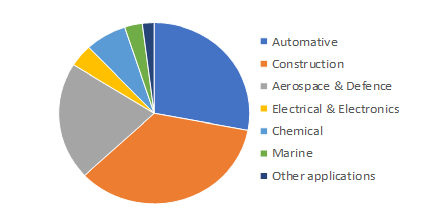
Figure 3: Global basalt fibers market share by application value71
The global market for construction materials is estimated to be worth over $1.1 trillion in 2020[6]. Drivers for growth in sector include:
- Population growth, which is increasing demand for housing and infrastructure projects (water, transport and energy).
- Urbanization and increasing number of one or two people households.
- Growing affluence of the global middle class.
- Demand for more sustainable building materials – which is growing at around 12% per year[7].
In the GCC market, recent years have seen increased demand for building materials due to population growth, particularly in KSA, as well as large infrastructure programs in Qatar linked to the 2022 World Cup and in UAE, linked to Expo 2020[8]. In Oman, there are OMR 5.3 billion of development projects included in the Five-Year Development Plan, including OMR 1.3 billion in
infrastructure projects[9]. Overall, the GCC market for building materials is estimated to be worth $3.2 billion.
In Oman, just in the residential sector, 25-30k building permits are issued by the government annually13. If we assume an average home size of 250 sq.m. and average construction cost of OMR 100 per sq.m., the size of the construction industry in Oman for the residential section alone can be pegged at OMR 600-800 million. This industry size estimate shows that there is a large market for construction material.
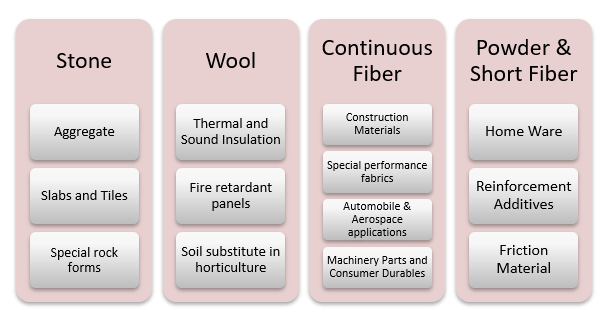
Basalt is traditionally used in Oman as aggregate material in the construction industry due to its excellent compressive strength and wide availability. Global industry leaders of basalt downstream industry are Russia, Ukraine and China with Europe and USA catching up. As revealed in Figure 4, basalt can be used in its natural form; stones; or its processed form; powder, wool and fiber; in many applications with the fiber-based applications being more high-end and with potential to create the most value. UAE has the first regional factory producing basalt wool which is used in insulation as it has excellent thermal and sound insulation properties. Basalt fiber-based fabrics have potentially wide applications in sports goods and as fire retardants while basalt-based composites have applications in the automobile, aerospace, defence, electronics, chemical, marine industries and, most importantly, construction industry.
Although the basalt-based downstream industry is still relatively nascent, the global basalt fiber market is projected to double from UD$ 190 million in 2018 to over US$ 400 million in 2025[10].
1.3.2. Value chain structure
The value chain structure for basalt and basalt related products was investigated. Figure 5 represents the key processes and typical value chain structure for basalt-based products.
Most of the countries and companies around the world mines and extracts basalt and used it as a crushed stone for road construction and concrete fillings. One basalt quarry can supply millions of tons of basalt rocks. These rocks as shown in Figure 55 can be melted and used to produce basalt fibres. However, it is important to note that not every basalt rock can be utilized for production of basalt fiber, only those contain specific properties and characteristics can be used. As such selecting the right deposits of basalt is a very crucial. The quality and characteristics of produced fibres especially Basalt Continuous Fibers (BCF) highly depend on the proper section of the raw materials. Basalt Fiber & Composite Materials Technology Development suggested workflow to be followed before commencing any production[11]:
- Analyze the geological structure of the deposit and select the basalt samples for investigation.
- Conduct a preliminary testing of the sample. The test will investigate the sample melting point, nature of melting and quality of the melt. It will also asses the quality of the initial fibres.
- Evaluate the grade of the basalt’s sample. The deposit is considered as good potential for fibres production if it is classified as grade 3 or more. Certain criteria are used in the evaluation such as melting point, the parameters of the basalt melts and capability to pulling single fibers from melt.
- Produce a pilot batch of Basalt Continuous Fibers (BCF) at the experimental furnace.
- Assess the strength and elastic properties, thermal and chemical resistance and other indexes of experimental batches of BCF.
- Development of Technological processing parameters and Technical standards for BCF production.
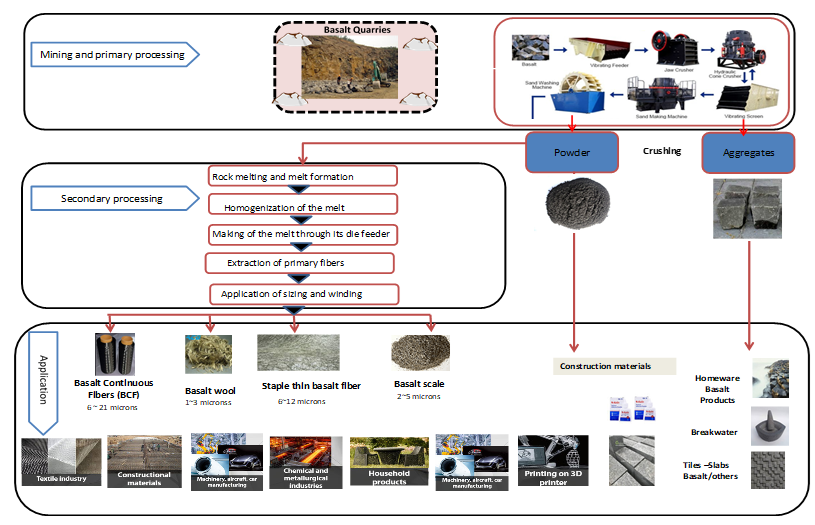
Figure 5: Basalt Value Chain
Basalt fibers are produced in different types[12]. These are:
- Basalt Continuous Fibers (BCF): diameter 6 to 21 microns, and length of 40 to 60 km;
- Super Thin Basalt Fibers, or basalt wool (STBF): diameter 1 to 3 microns, average length of fibers is 50 mm;
- Thin Staple Basalt Fibers (TBF): diameter 6 to 12 microns, with average length of fibers is 30 to 60 mm;
- Basalt scale, made from basalt breeds (BSc): thickness 2 to 5 microns, area 0.5 to 4 mm2
The sections below focus on the main technologies used to produce basalt fiber and basalt wool.
Basalt Fiber
Two fairly simple methods exist today to manufacture basalt: Spinneret technology for continuous fibers, and Junkers technology for short fibers[13]. The more common Spinneret technology is shown in Figure 6 below
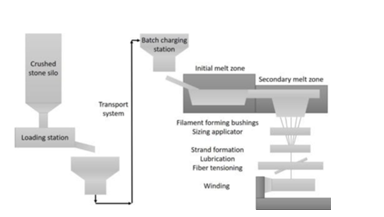
Figure 6: Spinneret technology for continuous fibers76
The process of producing fibers from basalt is based on selecting the richest chemical proprieties basalt rocks with the use of quality tests, crushing the rocks and melting to high temperatures. Basalt continues filaments are made from the basalt rocks in a single step process melting and extrusion process. Technological process of manufacturing basalt filament consists of melt preparation, fiber drawing (extrusion), fiber formation, application of lubricants and finally winding. Basalt fibers are currently manufactured by heating the basalt and extruding molten liquid through a die in the shape of fibers.
Basalt wool
Basalt is produced by blowing a basalt melt with high temperature gas. The current best practice (Figure 7) is to use plasmatrons as a source of the gas[14].
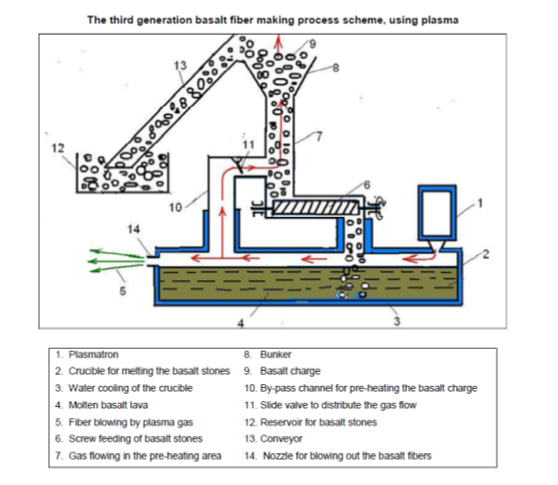
Figure 7: Production of Basalt Wool77
1.3.3. Technology overview
The technology of raw basalt fibers and wool is well established. Therefore, the main advancements happen in the postprocessing of these materials, and creation of the final complex innovative solutions, which utilize the advanced properties of basalt fibers. These include specialty applications, which need the tensile strength, thermal and chemical resistance of basalts; complete user-oriented systems (e.g. hydroponics with climate control and fertilizer control software); customized building materials. In the Middle East the competitive advantage might be thermal insulation building materials, limiting heat exchange in the buildings.
1.3.4. Application opportunities overview
Basalt in Natural Form
Aggregates
Basalt rocks are known for their high compressive strength and chemically inert nature and therefore are used widely in aggregate form in the construction industry as fillers, foundation material and in the concrete mixture. The value chain of aggregates is very simple four-steps process of quarrying, sorting, sizing and transportation to site. 35-40 million cubic meters[15] of building materials (aggregates which includes basalt, gabbro, etc.) are mined in Oman annually. These aggregate materials (Figure 8) are sold locally for OMR 3-5 per ton yielding very low value which may be just enough to cover the cost of the short and simple value chain and afford a small profit for quarrying companies. Oman has exported about 20 million tons of aggregate material in the 2017-18 period at unit value of US$ 6-8 per ton[16].
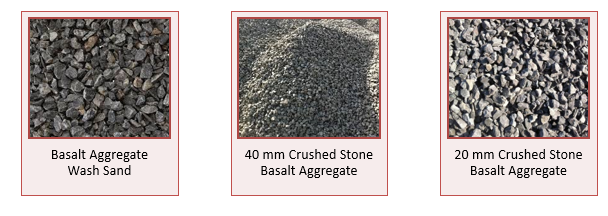
Figure 8: Basalt Aggregates
Slabs and Tiles
Oman has a well-established and relatively modern marble processing industry which produces 5-10 million square meters of marble slab and tiles annually. With the presence of very large deposit of basalt in the country, Oman has the potential to develop a parallel basalt stone processing industry or encourage marble stone processors to experiment with the basalt blocks (Figure 9). The average cost of producing high quality marble slabs, from mining till polishing, is estimated to be about OMR 2.5 per square meter (quarrying cost of OMR 1 and processing cost of OMR 1.5 per square meter of final output) during the Marble Sector Innovation Program in 2018. If we assume the same cost for basalt quarrying and processing, basalt stone and slab industry has a high potential of financial viability as the basalt slabs can command wholesale price ranging from US$ 10-40 (OMR 4-16)[17][18] per square meter which is equivalent to US$ 100-400 per ton and is already a 12-50 times multiple in value addition.
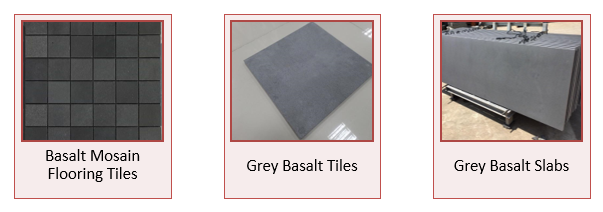
Figure 9: Basalt Slabs and Tiles
Special Rock Forms
Natural basalt rocks may be found in a special form with large perforations which are formed due to escape of trapped gases from lava sprays (Figure 10). These rocks, due to their perforations are lighter in weight with high surface areas. There are two major applications of these special basalt rocks as pumice rock for personal hygiene products and as lava stone in BBQ or sauna. Due to their perforations and large surface areas, these rocks can be used in gardens as soil enhancers or as medium for water filtration. These rocks and powders wholesale between US$ 50-200 per ton[15].
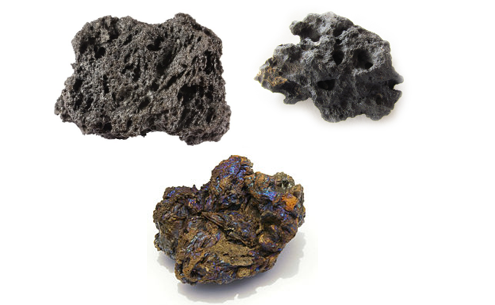
Figure 10: Basalt Special Rock Forms
Basalt Wool
Basalt wool is one of the two main intermediates in the basalt fiber industry value chain. Basalt wool is mainly used as insulation material but can also be used in the production of composite materials for internal and external walls/claddings, ceiling systems, growth medium in horticulture and in the creation of vertical and rooftop gardens. Due to its chemical inertness and its ability to repel rodents and reptiles, it has higher service life than the glass wool products.
Production of Basalt Wool
Basalt wool is unwound form of basalt fiber produced by blowing a high temperature gas (latest technologies use plasmatron as source of heat) over a basalt melt (Figure 8). This process can produce thin fibers (5-15 microns diameter) and super thin fibers (1-3 microns diameter). The super thin fibers are produced when the hot air is blown at near sonic speed. The super thin fibers have better thermal and sound insulation properties than regular basalt fiber / wool.
A basalt manufacturing plant of capacity of 8000 tons per year (1 ton per hour) is estimated to cost US$ 2-3million with projected production cost of US$ 500 per ton of basalt fiber. Based on the cost of imports of different fibers, at a selling price of US$ 800 per ton, the investment should pay back within 12 months of operation at full capacity.
Figure 11: Basalt Fiber Production using Plasmatron[19
Applications of Basalt Wool
1. Insulation Material
Basalt wool and derived products like fiber boards, fiber canvas and sewed mats have a large potential market for thermal and sound insulation in the region (Figure 9). Oman already imports about US$ 25-30 million of glass-, mineral- and rock-based non-woven fibers annually which translates to about 14k-17k tons of non-woven fiber. These fibers are used for thermal insulation, manufacture of FRP (Fiber Reinforced Plastic) products and in the fiber optics industry. A local basalt fiber plant producing basalt wool should be able to substitute substantial portion of this import as it can service the needs of insulation and some of the composite products.
The average price of import of slag-wool, rock-wool and other mineral-wools (under HS code 680610) ranges from US$ 800-2200 over the last four years (2015-18) whereas that for glass wool (under HS code 701990) ranges from US$ 1900-3000 for the same period (Table 1).
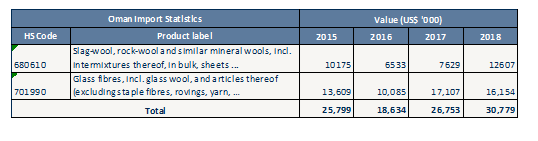
Table 1: Import statistics for non-woven glass wool, rock wool and other insulation materials
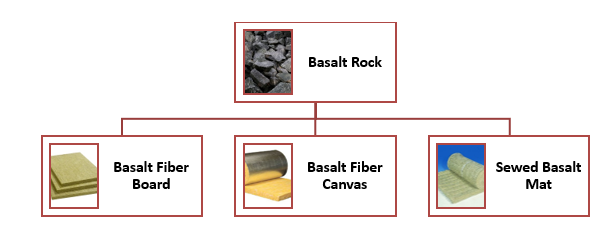
Figure 12: Basalt Wool Products from Basalt Rocks
Apart from its excellent thermal and sound insulation properties, basalt fiber boards can be used as passive fire retardants as they have relatively high working-temperature range and do not use any toxic binders in the manufacturing of these boards. The fiber boards use bentonite clay as binder which is a natural mineral available in Oman in large quantities and is chemically inert material.
Since Oman has high incidences of household fires, the government can consider making insulation of houses using basalt wool or fiber boards mandatory. This can create dual benefit of energy saving due to reduced heating loads (and thus lower incidences of fires which are generally result of overheating of electrical joints) and greater fire containment due to fire resistance provided by basalt fiber boards.
2. Architecture & Interior Design
Drywall & Ceiling systems
With ever increasing awareness towards use of green construction material and rising labour costs, there is a large potential for use of basalt fiber composite material or gypsum or clay with or without surface cladding to be used as dry walls and ceiling structures (Figure 10). Apart from providing quick and easy installation, these replacements provide much improved thermal and sound insulation that ordinary brick and mortar walls and the price or small premium price. Sandwich panels made of basalt wool with outer surface made of pre-painted galvanized iron sheets costs about OMR 7 per square meter[20] and can be assembled into wall of any size quickly and with very less labour requirement. A brick wall (cement brick of dimension 400mm x 200mm x 200mm @ about 200Bz per brick) costs about OMR 2.500 per square meter in cost of bricks alone.
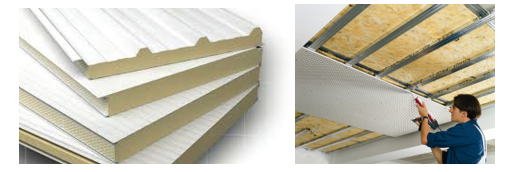
Figure 13: Examples of using basalt wool for Drywall & Ceiling systems
Exterior cladding panels
Basalt composite panels can be used in building exteriors as cladding materials. Basalt composite panels have many advantages over other cladding materials as it is excellent fire retardant, weather resistant, light weight, easy to install over curved surfaces and provides flexibility in design creativity.
Fencing
Basalt fiber composites with cement, concrete or other construction materials can be used in fencing homes, hospitals and spaces where loud sounds can be a major irritant. In cities, major roads and rail routes could be fenced to reduce noise and vibration levels and make a comfortable living space.
3. Growth Medium in Horticulture
Rock wool cubes are used for seed starters in the plant nursery, greenhouse setups and modern farming techniques like hydroponics, aeroponics and aquaponics. Rock wool is an excellent soil substitute for plants in controlled environment. Seed starter cube sets are available on Amazon at about US$ 40 per kilo in retail pack of 100-200gm[21].
Since basalt wool is an excellent growth medium for the horticulture industry and is a fraction of the weight of soil, it can be used in architecture to create green spaces in the buildings. Green roof or green wall can be designed into the building to increase the aesthetics of the structure, increase the green rating and add to the thermal and sound insulation all in one. If ophiolite rocks can be used to produce basalt / rock wool, green wall or roof using this material can help accelerate natural carbon sequestering process and thereby improving air quality within and around the building.
Architects can be creative in providing green space in office buildings, malls, airports and other large closed environment or extensively use vertical garden systems to enhance the ambience of restaurants, bars and other indoor social spaces (Figure 14).
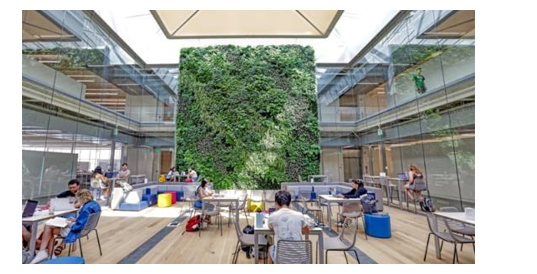
Figure 14: Green wall inside Washington University USA using basalt substrate[22]
Basalt Wool Product Diversification
Current best practices in basalt wool manufacturing are at Rockwool Group of companies (www.rockwoolgroup.com), the world’s largest producer of basalt wool (and the second largest producer of insulation materials). The group is split into several companies focused on different applications of the basalt wool:
Rockwool (www.rockwool.com): Fire safe insulation for all types of buildings, industrial installations and marine & offshore industry. The website lists 22 specialized products for insulation of attic, flat roof, exterior and interior walls, floor, and ceiling insulation.
Rockfon (www.rockfon.com): A complete ceiling system offer, combining stone wool ceiling panels with suspension grid systems, accessories and metal ceilings. 25 products (not counting metal suspension and framing furniture) in the areas of suspended ceilings, island and baffes. These include special application for hygienic, impact resistance, industrial, medical and acoustic conditions.
Figure 15 presents an example of using Rockfon ceilings in Marian Regional Medical Center in California. By installing Rockfon’s Chicago Metallic 1200 Seismic Suspension System and 1496 Seismic Perimeter Clip, this medical centre met the strict California seismic design category requirements.
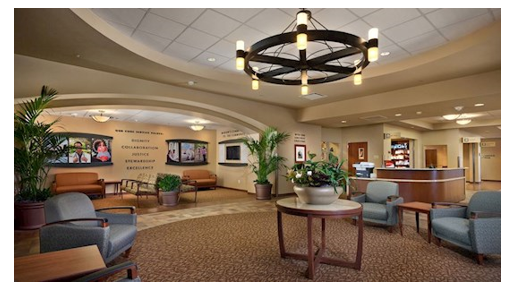
Figure 15: Marian Regional Medical Center, California built using Rockfon ceiling system
Rockpanel (www.rockpanel.com): Decorative boards for facades (including ventilated), partly cladded facades and detailing around the roof. Offers design freedom, ease of use for modern, sustainable architectural approaches. Eleven (11) products in the areas of basic applications, design, natural, and premium facades, planks.
Tychy water park in Poland, shown in Figure 16, was created with Rockpanel products. According to the architect: “Thanks to the Rockpanel panels, we managed to achieve this unique character, the facade which it was all about from the very beginning. Depending on the angle of view and the angle of incidence of light, a real spectacle of light appears to our eyes. The object was created on the ellipse plan and it even further strengthens the “chameleon effect” we created.”
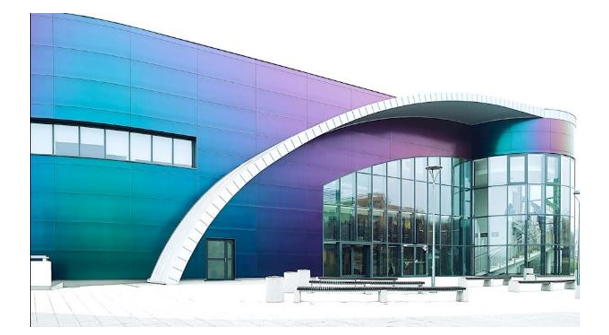
Figure 16: Tychy Water Park, Poland, facade built with Rockpanel products
Lapinus (www.lapinus.com): Engineered stone wool for composite applications, coatings, gaskets, noise and vibration control, automotive parts (e.g. brakes), and water management.
Grodan (www.grodan.com): Supply of sustainable stone wool substrate solutions for the professional horticultural sector based on precision growing principles. Twenty three (23) products in the areas of vegetable, propagation, and floriculture applications. The substrates are supplied as a growing system complemented with open software platform e-Gro. This digital platform gives greenhouse growers smart insights into the greenhouse, allowing even more efficient cultivation. Figure 17 shows tomato cultivated on Grodan Grotop Master Slab system.
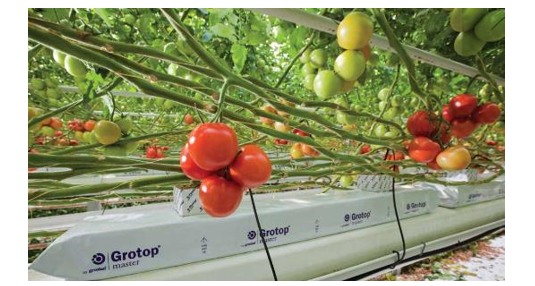
Figure 17: Grodan’s rock wool substrate used as soil substitute for anchor in horticulture applications
5. Continuous Basalt Fiber
Continuous Basalt Fiber (CBF) is by far the most important product in the value chain of the basalt downstream industry. The CBF manufacturing process is relatively very simple as compared to that of the Carbon and Glass Fibers as basalt rock is directly charged as raw material to a melting furnace without any additive and drawn into yarn, sized, lubricated, wound and packed (Figure 18).
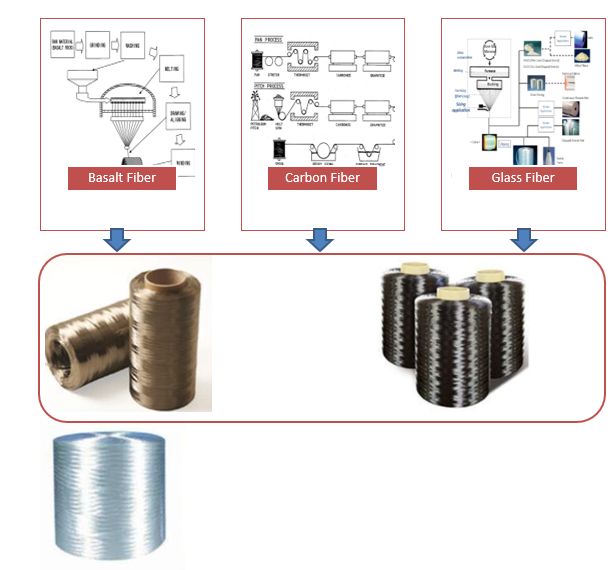
Figure 18: Comparing the manufacturing process of basalt, carbon, and glass fibers
Production of CBF
A Generation 2.0 large-scale industrial production of CBF, offered by Global Basalt Engineering Co.[23] is a single furnace 1000 tons/year capacity facility costing about US$ 8 million (US$ 8000 per ton capacity) can be operated by 65 people. With basalt fibers selling at about US$ 2500 per ton and basalt rebar selling at US$ 4200 per ton, there is a possibility of the investment in a continuous basalt fiber plant to pay back within 5-8 years. Figure 16 illustrates the steps required to process and produce BCF from the quarry till packaging.
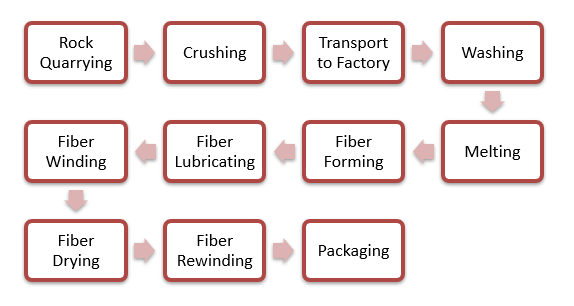
Figure 19: Process steps in conversion of Basalt rock to Continuous Basalt Fiber
Applications of CBF
Basalt fiber has potentially large number of applications as composites in varies industries like construction, oil & gas, pressure containers, renewables components, machine parts and components in automobiles, aerospace, nuclear and military applications (Figure 20). Basalt fiber composite can replace the very expensive carbon fiber composite in some of the applications where carbon fiber exceeds the performance requirement of the applications. It also replaces glass fiber composites where chemical stability is one of the requirements.
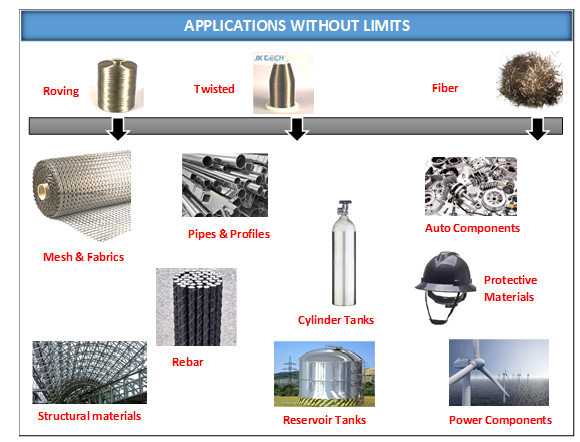
Figure 20: Applications of Continuous Basalt Fiber
Continuous Basalt Fiber can be in the form of roving, which is used in the manufacture of basalt rebars, construction mesh or pipes and profiles or as twisted yarn for the manufacture of textiles and yarn- or textile-based engineering products. Construction and oil and gas industries of the region offer a vast untapped market for CBF-based composite products for large-scale applications whereas other engineering and structural applications for consumer goods, automobiles, aerospace and electronics can offer opportunities for higher value addition.
A tentative price appreciation for CBF-based products across its industry value chain is illustrated in Figure 21. It can be seen that large volume products like rebar, geogrid mesh and profiles can command US$ 4,000-10,000 per ton while the fabric and the derived engineering and consumer goods products can command price appreciation from US$ 20,000 to US$ 100,000+ per ton in products like helmets, car body parts, yachts and boats, etc. There is an unlimited potential for composite products to replace steel and aluminum alloys in automobile and bicycle parts where carbon fiber composites have made inroads but have limited success due to their prohibitive prices.
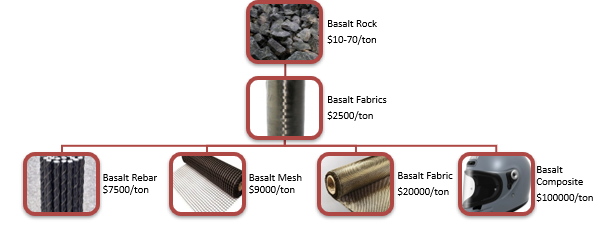
Figure 21: Continuous Basalt Fiber value chain price appreciation[24]
Basalt Rebar and Mesh for Construction
Currently, one of the most important application of CBF is the steel rebar replacement for the construction industry. Basalt rebar costs have reduced to become competitive with the steel rebars offering host of other advantages like:
- Transport and labour cost savings due to its light weight (1/3 that of steel)
- Reduced cracking and longer structural life as:
- Basalt rebar have same thermal expansion to that of concrete and
- Basalt rebars are chemically inert and do not rust or expand in presence of moisture
Composite Group – Chelyabinsk, Russia, has a list price of US$ 4,200[25] per ton for basalt rebars which translate to only 10% more expensive than the steel rebar @ US$ 485[26] per ton of equivalent strength profile. If this price and technology trend continues, soon basalt rebar will become the norm in the construction industry due to its advantages of weight and chemical inertness unless stifled by supply constraints. GCC has a booming construction industry and a regional basalt rebar manufacturing facility can command a very large market.
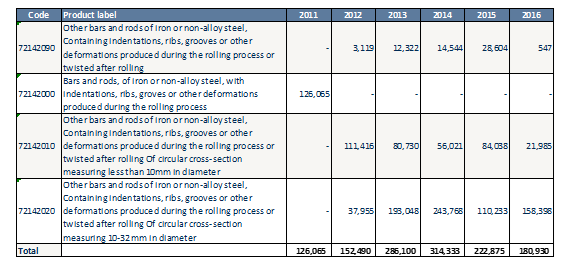
As illustrated in Table 2, Oman imported US$ 100-300 million worth of steel rebar annually when it had no local production. This figure can be used as a good approximation for the potential market size for basalt rebars for a local manufacturing plant that can compete on cost with the imported steel rebars.
From the statistics, it can be seen below that although the import of smaller diameter bars and rods (HS code 72142010) has drastically decreased, it has been accompanied by increase in import of higher diameter products in the same category. Basalt rebar has excellent advantages in the higher diameter segment due to its light weight and ability to compete at cost due to much lower transport and handling costs.
Another construction material that is imported in large volume is the steel wire mesh used specially in the road construction. Oman annually imports US$ 12-15 million of mesh at the price of US$ 1000-1200 per ton of the material. This and rebar together offer a good opportunity for a large-scale construction material production facility in Oman that can cater to the Oman and the GCC markets.
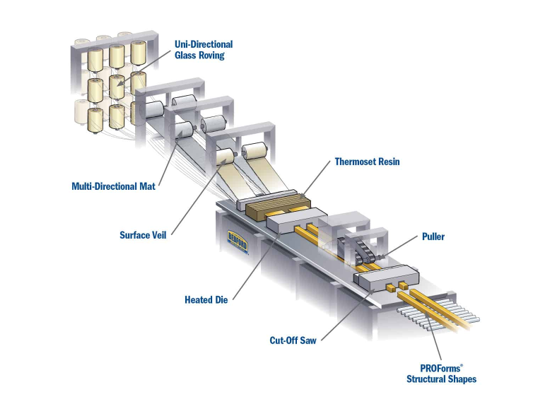
Basalt Profiles
All profiles of Basalt / Glass FRP are produced using the Pultrusion process (Figure 22). The Basalt composite profiles can replace aluminum and iron profiles used in construction and other products like cable trays. Basalt composite alternatives are ideal replacement where corrosion resistance and decreasing the weight of installations are important concerns. Basalt profiles can replace aluminum profiles in heavy duty applications. Basalt profiles can command US$ 5,000-9,000 per ton for simple cross sections and much higher for complicated ones.
As per the numbers presented in Table 3, Oman imports US$ 50-80 million of aluminum profiles annually at average price of US$ 3,000 per ton. Prima facia, it seems that a local Basalt composite profiles manufacturing company should be competitive with imports and should have a large local market to cater to.

Table 3: Aluminium profiles Oman import statistics (value in US$ ‘000) 2015-1814
Tubes and Pipes
Tubes, pipes and hollow profiles, seamless, of iron or steel are used in the oil & gas, chemicals, utilities and the construction industries. Oman imports US$ 250-400 million value of these products at a cost of US$ 1500-2000 per ton of the material (Table 4). Basalt composite pipes made from basalt roving and / or basalt fabric offers better corrosion resistance and fire-retardant properties. Due to their high-pressure capacity, the basalt composite pipes offer longer durability and most importantly easier handling leading to reduction in the transport and operations costs. Since lighter material required lesser heavy equipment, use of basalt composite pipes has the potential of improve the safety of the operations (Figure 23).
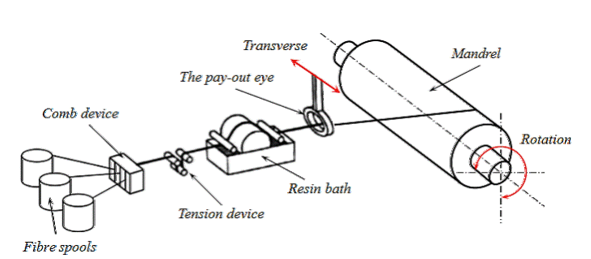
Figure 23: FRP Pipes manufacturing process[28]
Composite Pipes Industry LLC in Oman has GRE and GRP pipes made of fiber glass in its product portfolio. Amiantit Oman too uses glass fiber to manufacture FRP tanks and storage vessels for the local industry. Local companies like the Composite Pipes, Amiantit, etc. who are already using imported glass fiber as raw materials for their industrial products can benefit from a local source of continuous and discrete basalt fiber that will give these companies the confidence and provide initial mass volumes to the local manufacturer. These companies can be roped in as partners to investigate the feasibility of local continuous basalt fiber manufacturing facility as they can support with local industry knowledge, cost of imported raw materials, local demand and quality parameters.
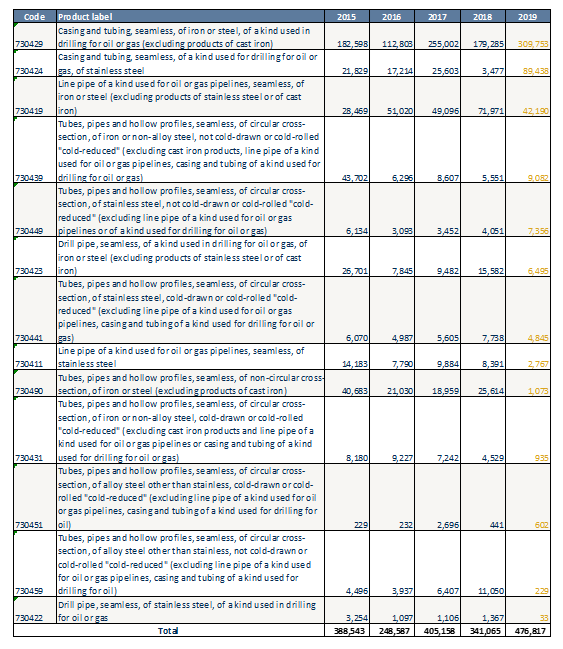
Table 4: Import statistics for seamless tubes, pipes and hollow profiles of iron and steel14
Basalt Fabric and Composites
Basalt fabric and their composites can have many interesting applications due to their high tensile strength combined with light weight, thermal insulation properties and fire retarding abilities. Basalt fiber textiles or textiles made of combination of basalt and other fibers can be used in the production of sports goods, uniforms of firefighters or other high-performance applications. Basalt fabric’s most potential large-scale application can be in the production of boats and yatchs, high-pressure application pipes, automobiles components, parts of windmills, gas cylinders, fire extinguishers, water heaters and tenting materials. Basalt fabric can be used to increase the structural strength of existing infrastructure and also to provide thermal and sound insulation where required.
Oman has local manufacturers of water heaters and firefighting equipment and these rely on import of basic raw materials which can be made from Basalt fabrics / fiber based composites. A local Innovation Centre can help conceptualize, design and develop such alternatives that will reduce the reliance of local industry on import of raw materials and help them compete in the regional and international markets due to better access to innovation infrastructure.
Innovation Centre
Basalt fibers can be used for 3D printing tools and components that are expensive to produce in small batches from their traditional raw materials. Anisoprint[29], a Russian company, has launched desktop and industrial 3D printers (Figure 24) that can use continuous carbon fiber (CCF) and continuous basalt fiber (CBF) in different plastic mediums to produce parts with varying fiber content as per the performance requirement of the products (Figure 25). The printed parts offer high degree of customization, ability to produce small number of parts on demand at a fraction of the price and time required to produce equivalent part in the traditional production system.
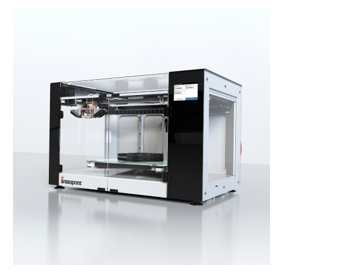
Figure 24: Desktop 3D printer by Anisoprints for producing Carbon and Basalt fiber composite products
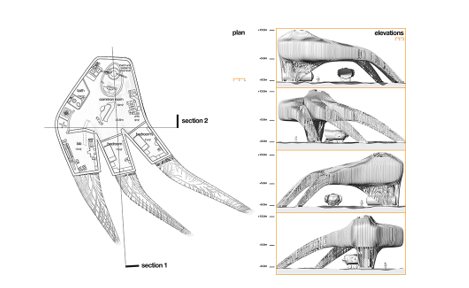
Figure 25: Mars Habitat design to be 3D printed using Basalt and Carbon fiber composites
6. Short Fibers and Powders
Short fibers (Figure 26) and powders which can be the by-products of the basalt wool and continuous fiber production are widely used as reinforcement in various materials.
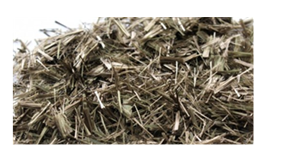
Figure 26: Chopped Basalt Fiber
Applications
Reinforcement Material
Basalt fiber is thermally stable in the range of -260 to 900°, stable in aggressive media (alkali and acidic solutions) and resistant to friction. It is used as a three-dimensional enforcement of binding and construction materials. Its application examples are:
- Gypsum: 0.5-0.7% addition of basalt fiber leads to ~30% increase in strength allowing direct production of gypsum parts, without structural reinforcement.
- Sand-cement mix: 0.1-0.2% addition leads to 70% increase in bending strength, while keeping the compression strength.
- Solid concrete: 0.1% addition leads to 20% increase in bending strength, while keeping the compression strength. Decreases the setting time.
- Foam concrete: 0.1-0.2% addition leads to 25% increase in bending strength, and up to 80% in compression strength.
Area of application of basalt reinforced concrete are in earthquake-resistant structures, industrial floors, underground communications and transportation, sea walls and other hydraulic structures, coal and ore storages, concrete road surfacing, bridges, airport runways, etc.
Friction Materials
Due to its high strength, high temperature stability, light weight and high abrasiveness, Basalt chopped / short fibers can be used to produce various industrial friction materials like brake and clutch linings (Figure 27), files, sanding tools and various scrubs for cleaning purposes. Oman imports about US$ 1-3 million of friction material / brake lining at US$ 5000+ per ton. As economy of Oman develops, there will be greater need for transport of goods and people increasing the consumption of braking material in the country and the region.
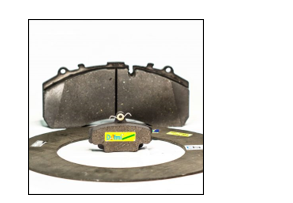
Figure 27: Brake lining and clutch materials
Soil Enrichment
Basalt powder is an excellent source of remineralization of agricultural lands as it contains many minor minerals essential for the growth of crops. Basalt Powder is an effective natural method to supply fertility and nutrients to the soil. Remineralization of soil using basalt powder has immediate effect but with slow release of minerals can last many years. Many fertilizers are mixed with basalt powder for their mineral content and effective yield increase observed.
Since there are no special properties required for use of basalt in remineralization, cutting waste from basalt slab industry and ground scraps of basalt wool and fiber production can be used for this purpose without adverse effect. Basalt processing industry can potentially dispose of their production scrap through conversion into soil additive and thus not burden the environment by occupying landfills. A research may be needed into whether basalt composite products could also be similarly disposed to environment after grinding as soil additive.
Basalt Sector Opportunities
Introduction
2.1.1. Broad Insights into Basalt Industry
When exploring opportunities for development of a basalt industry in Oman there are some broad insights that have implications for most opportunities which are useful foundational context:
Basalt deposits within the country are not essential for development of the industry: Whilst basalt material is essential in the production of basalt derived products, the abundance and low cost of basalt reduces the economic advantage of domestic deposits. When producing basalt fibers from raw materials it is preferable to have a local supply, but it is not essential. For example, Mafic use a European source of basalt fiber for production in Ireland and are reported to be using this source for their new plant in the US whilst exploring alternative US sources.
Know-how is key: The production facilities for many basalt products are relatively simple to describe. However, the number of variables associated with producing high quality consistent products means that experience and know-how are key to making it a success. In some examples this places emphasis on working with partners who can leverage their expertise and networks in transferring world class production know-how to Oman.
Cultivating partnerships with end markets is key: There are number of applications where basalt-based products offer clear technical advantages over the incumbent materials used in their respective markets. But basalt remains in the very early days of mainstream commercial adoption. Several decades of production improvement is now making large scale supply of consistent quality basalt products and materials feasible and commercial adoption is slowly becoming a reality. But until industries are comfortable with adopting this new material then it will remain a niche product. There is evidence that a pattern of wider adoption is in its infancy and the variation in standards for adoption of different materials in different countries is substantial. Almost all of the commercial entities involved in the supply of basalt-based materials place substantial efforts in engaging industry to sell the benefits.
2.1.2. Analysis of opportunities
Most opportunities in the basalt fiber industry represent nascent markets with differing risk profiles and growth potential. Table 1 below provides analysis of each opportunity. Analysis may be subject to updates based upon further research. (Note: Basalt Innovation Centre is not included in analysis)
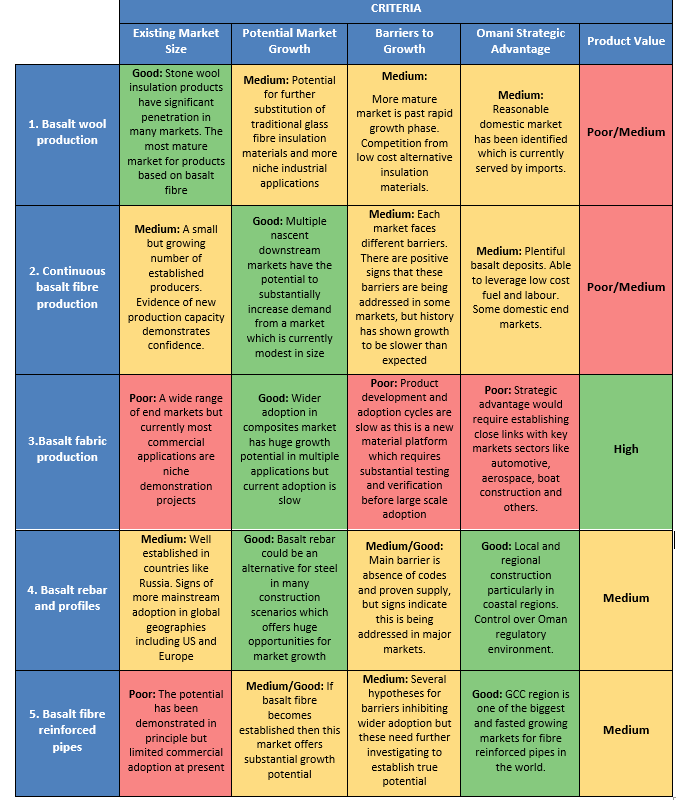
Table 8:Criteria used to analyze the opportunities
2.2.1 List of Opportunities
All 6 opportunities are listed below in their respective clusters. Click on each opportunity to find out more.
Basalt Fiber wool production
Continuous basalt fiber production
Basalt fabric production
Basalt Rebar And Profiles Production
Basalt pipes production
Basalt Innovation Center For Design And Prototyping
Citations
To view citation please expand:
[1] Properties and Applications of Basalt Fiber and Its Composite: https://iopscience.iop.org/article/10.1088/1755-1315/186/2/012052/pdf
[2] Mafic rock: A rock that is composed predominantly of the iron and magnesium rock-forming silicates (in general, any dark rock). Ultramafic rock is the same but having even less (<45%) of silica content.
[3] Mineral Resources Bulletin, Investment Opportunities, Basalt Fibers, Issue 2, Sultan Qaboos University.
[4] Basalt Fibre Market: https://www.gminsights.com/industry-analysis/basalt-fiber-market
[5] Basalt Fibre Market: https://www.marketsandmarkets.com/Market-Reports/basalt-fiber-market-39388070.html?gclid=EAIaIQobChMI5fr94eT96AIVk813Ch2Q4QvmEAAYASAAEgJE2_D_BwE
[6] Global construction materials market: https://www.strategyr.com/MarketResearch/Construction_Materials_Market_Trends.asp
[7] Demand for sustainable construction materials: https://www.researchandmarkets.com/reports/4412656/global-construction-sustainable-materials-market
[8] GCC Construction Industry 2015: http://www.alpencapital.com/downloads/GCC_Construction_Industry_Report_June_2015.pdf
[9] Oman’s construction market snapshot: http://www.project-oman.com/market-insights
[10] https://www.gminsights.com/industry-analysis/basalt-fiber-market
[11] Basalt Fibre & Composite Materials Technology Development: http://basaltm.com/en/bazaltovye-porody/rowbasalt.html
[12] http://basaltm.com/en/bazaltovye-porody/rowbasalt.html
[13] Basalt-based fiber-reinforced materials and structural applications in civil engineering: https://www.researchgate.net/publication/330891008_Basalt-based_fiber-reinforced_materials_and_structural_applications_in_civil_engineering
[14] http://goodrichmagma.com/index.php/plasma-technology-for-basalt-fiber-production/
[15] Statistical Year Book 2019: National Centre for Statistics and Information, Sultanate of Oman
[16] www.trademap.org
[17] www.alibaba.com
[18] www.stonecontact.com
[19] http://goodrichmagma.com/index.php/plasma-technology-for-basalt-fibre-production/
[20] https://www.startlinggmpcleanroom.com/sandwich-panel.html
[21] https://www.amazon.com/rockwool-seed-starter/s?k=rockwool+seed+starter
[22]http://basalt.world/en/nine-meter-green-wall-decorates-interior-design-of-washington-university/
[23] https://basalt.engineering/generation20
[24] www.basalt.engineering
[25] http://compositegroupworld.com/produktsiya/bazaltoplastikovaya-armatura.html
[26] http://compositegroupworld.com/KPenglish.pdf
[27] The Pultrusion Process: https://bedfordreinforced.com/the-pultrusion-process/
[28]https://www.researchgate.net/figure/Schematic-diagram-of-filament-winding-technique_fig1_330410624
[29] https://anisoprint.com/
Please note: These pages provide an introduction and overview of the nature of the selected opportunities. For more detailed information or to get involved with this opportunity, please contact Talal Al Wahaibi at the IIC: Talal.AlWahaibi@iic.om